Introduction
Lagunaria (DC.) Rchb. is an Australian genus of Malvaceae, comprising two currently recognised species, L. patersonia (Andrews) G.Don, which is native to Norfolk and Lord Howe Islands, and L. queenslandica Craven native to north-east Queensland (Kodela and Green 2024, Australian Native Plants Society 2025). Lagunaria patersonia, also called Norfolk Island Hibiscus, is widely cultivated in Western Australia, as well as other Australian states and internationally, because it is considered an attractive, tough, and easy-to-grow species for coastal areas, particularly those subjected to salt spray (Cheers 2004, Australian Native Plants Society 2025). The seed capsule of Lagunaria is lined with fibres that are known to cause severe skin irritation, leading to explicit warnings for those intending to handle the species, and the common names itchy bomb tree, itch tree, and cow itch tree (Southcott and Haegi 1992, Cheers 2004, Kodela and Green 2024). The morphology of the irritating hairs in the seed capsule has never been formally reported. This work used light and electron microscopy, as well as simple chemical tests, to characterise these hairs to better understand their likely health impacts.
METHODS
Seed capsules of Lagunaria patersonia were sampled from trees growing on the campus of Curtin University, Perth, Western Australia. Imaging was performed using a Jeol NeoScope JCM-6000Plus benchtop Scanning Electron Microscope. Preliminary testing found that no fixation or coating was required. Images were taken in variable-pressure mode at a beam energy of 15 keV. Samples were placed on a specimen holder using Ted Pella Inc. double-sided carbon tape.
As a qualitative assessment of fibre composition, representative fibres were subjected to chemical digestion to distinguish organic from mineral materials. Fibres were immersed and agitated for 2 h at room temperature in either a sodium hypochlorite (30%) solution, a sodium hydroxide (20%) solution, or a hydrochloric acid (32%) solution. Following treatment, samples were rinsed with deionised water and examined under ×20 magnification to assess morphological changes, surface alterations, or evidence of dissolution.
Results and Discussion
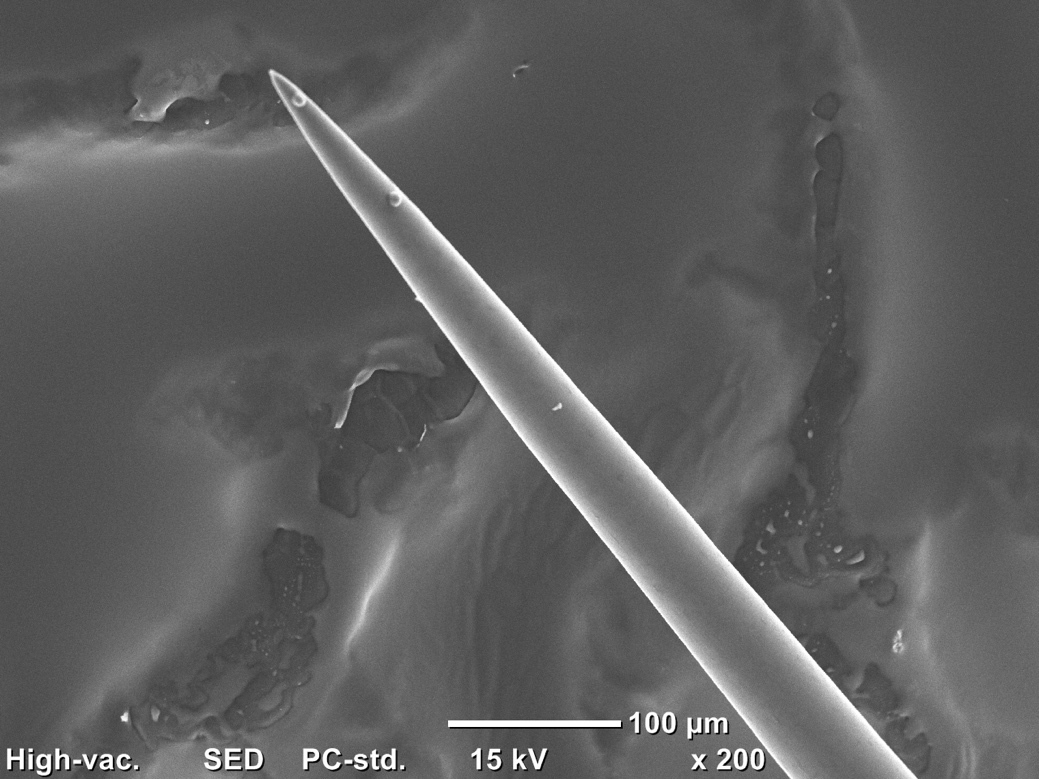
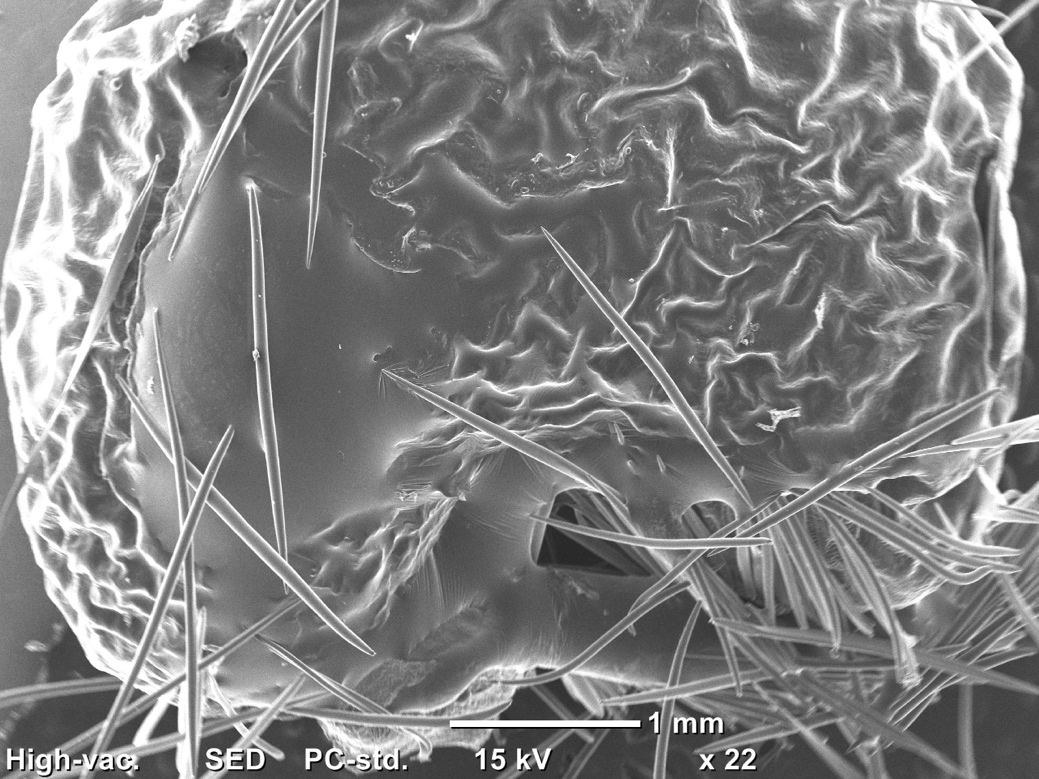
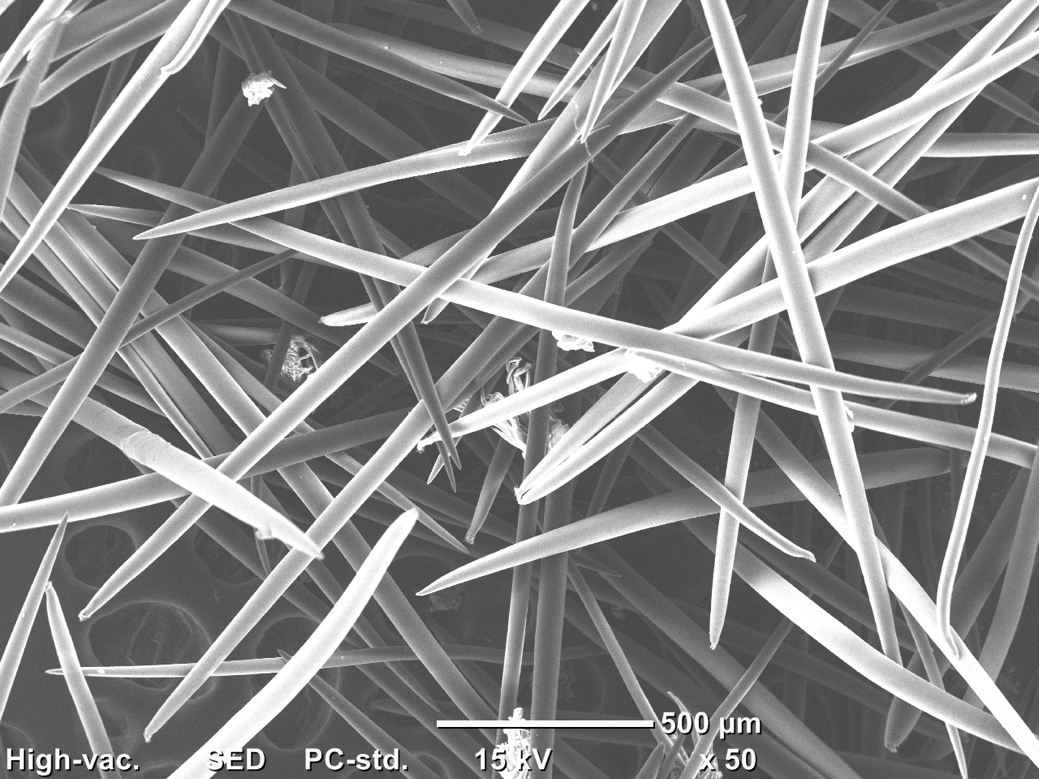
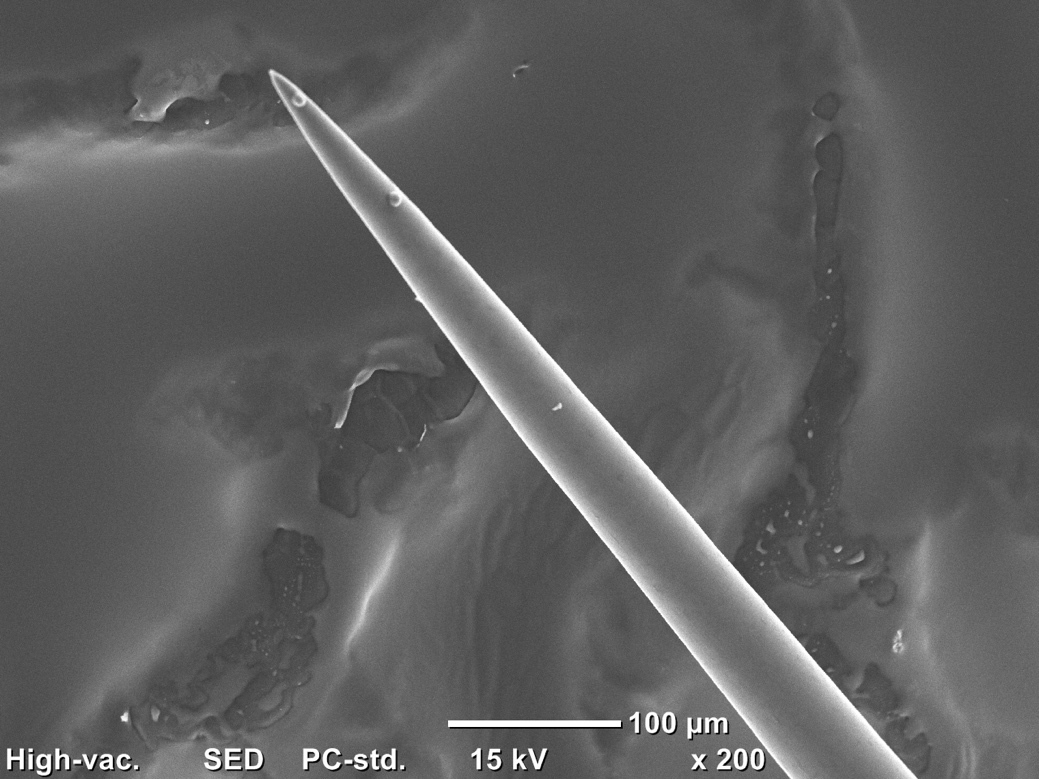
The fibrous material within the seed capsules was not firmly attached to the capsule wall. It is composed of elongated, acicular fibres approximately 1500 µm in length and 50 µm in maximum diameter (Figs. 1, 2). The fibres were straight, apparently strong and rigid, with none appearing bent or broken after handling for microscopy. The fibre tip radius is less than 10 µm, and at 200× magnification, the fibre surface appeared smooth and featureless, with no obvious barbs, hooks, or other surface ornamentation (Fig. 3). The geometry of the fibres within the seed capsules of L. patersonia is consistent with a structure that can readily penetrate the stratum corneum and epidermis of human skin, and reach the underlying dermis (Jung and Jin 2021, Makvandi et al. 2021, Oliveira et al. 2024).
Fibres exposed to sodium hypochlorite and sodium hydroxide showed no visible change in colour, morphology/integrity, or surface features relative to untreated material, indicating resistance to degradation that would be expected with organic plant fibres (Morley 1968, Knill and Kennedy 2003, Sghaier et al. 2012). Fibres treated with hydrochloric acid did not exhibit effervescence but did display minor surface pitting and darkening. This suggests the fibres are mineral rather than organic, but are unlikely to be calcium carbonate (Klein and Dutrow 2007). This suggests the material is predominantly opaline silica, which is common in higher plants (Sangster and Hodson 2007), but further tests are required to confirm this.
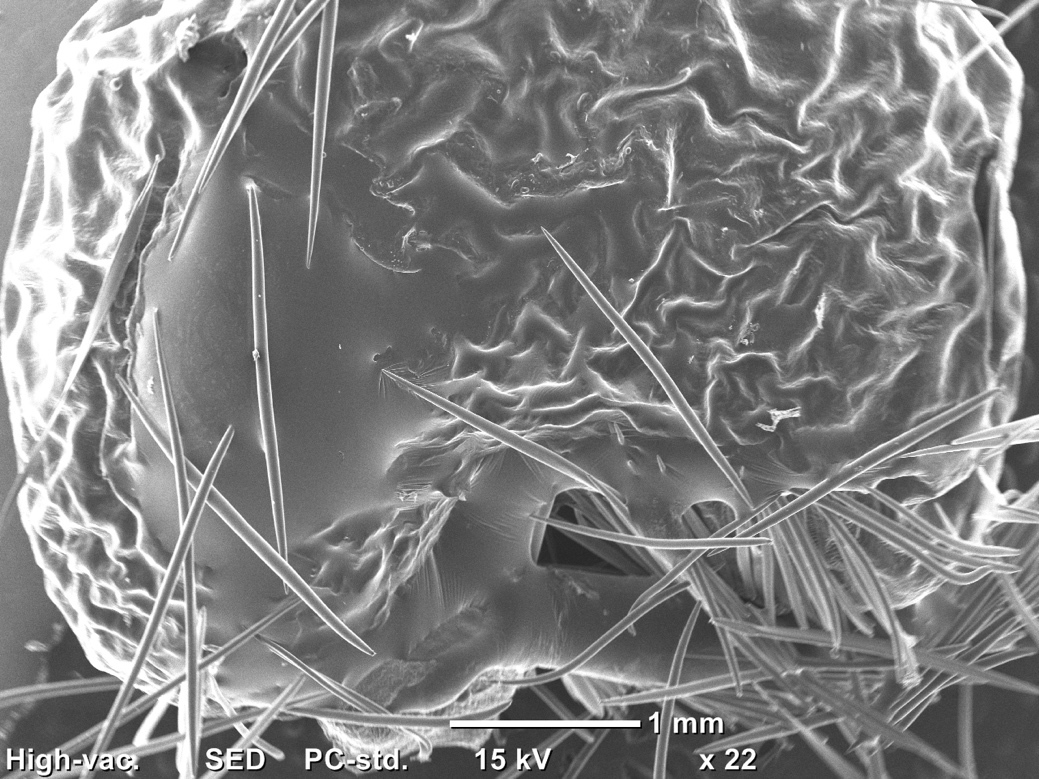
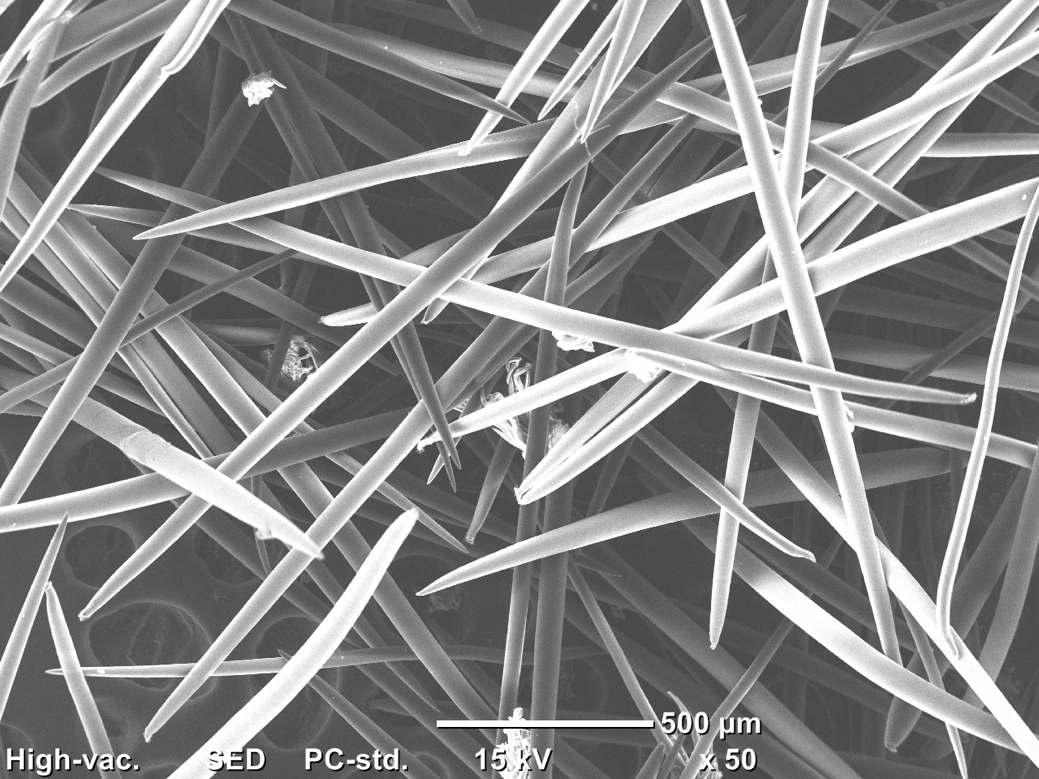
Contact dermatitis is an inflammatory reaction that occurs when skin comes into contact with external substances (Tramontana et al. 2023). It can be divided into mechanical irritant and chemical irritant dermatitis, with common mechanical plant irritants including thorns, spines, glochids, trichomes (hairs), and sharp-edged leaves (Modi et al. 2009). The seed capsule fibres of L. patersonia are characteristic of plant mechanical irritants, which induce contact dermatitis via physical penetration and retention in the skin rather than via a specific chemical toxin (Modi et al. 2009). They are morphologically comparable to the glochids of Opuntia spp., short, hair-like spines that readily detach and penetrate the skin and ocular tissues, (Modi et al. 2009). Glochids of Opuntia spp. are crystalline cellulose rather than opaline silica (Pritchard and Hall 1976). Given that they lack surface barbs, the fibres of L. patersonia may be easier to remove than glochids such as those of Opuntia (Crofts and Anderson 2018). These findings clarify the physical basis of irritation associated with this species and contribute to understanding its potential health risks and safe handling.