_western_part_of_australian_continent_(the_area_of_focus_for_the_journal_of_the_royal_s.tif)
INTRODUCTION
“The Royal Society of Western Australia John Glover Research Support Grants” were established in partnership with The University of Western Australia (UWA) based on a large bequest left to the Society by Dr Joseph John Edmund Glover in 2020. The grants are open to students at any university in Western Australia who are actively undertaking research in any field of the natural sciences, anthropology or archaeology that is directly related to Western Australia. The grant is for one year and seeks to support aspects of the project that may not be funded by other grants received in support of the overall project.
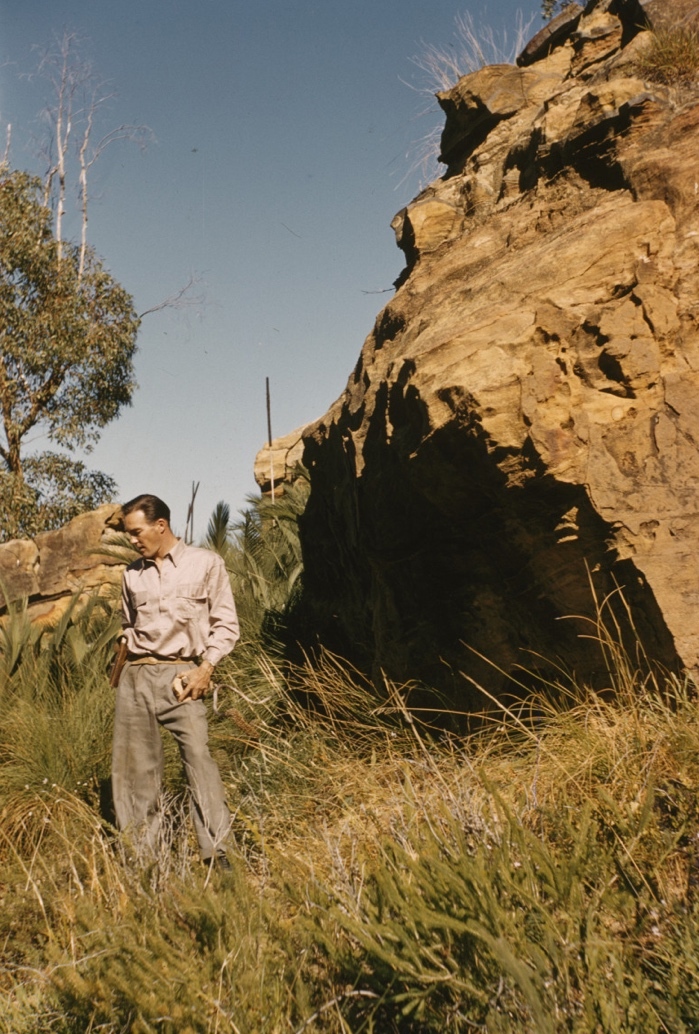
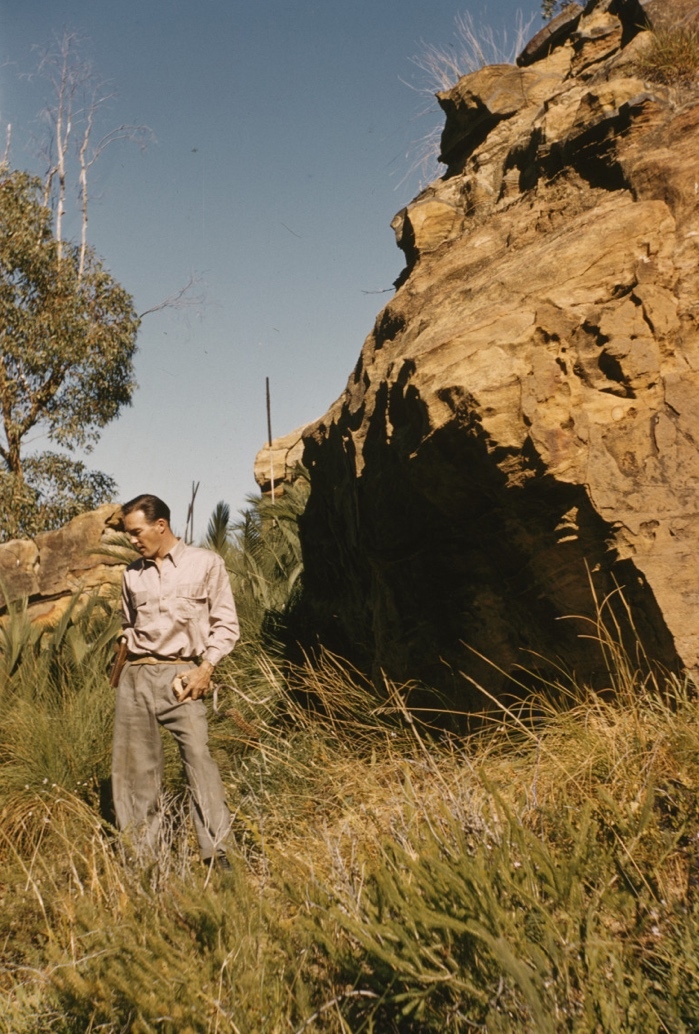
John Glover (Fig. 1) was born at Mt Baker, near Albany, in 1924 and passed away in Perth on 11 February 2020 (Bevan and Haig 2021). He spent 75 years associated with UWA, becoming an undergraduate student in 1939 and retiring from his Honorary Senior Research Fellowship in 2014. He was a sedimentologist who collaborated across the Geology, Geography and Archaeology fields. John was interested very much in science communication and was Editor of this Journal and of the Journal of the Geological Society of Australia and in retirement wrote several books on early scientific expeditions in Western Australia. For many years, while teaching in the Geology Department at UWA, he presented a course on Scientific English to numerous generations of honours students. John would have been pleased to see this compilation of research summaries based, in part, on funding derived from the bequest he made to RSWA.
The 2025 research outlined here falls in four broad categories within the natural sciences: (1) Plant–Soil interactions; (2) Terrestrial animals; (3) Freshwater invertebrate ecology; and (4) Coastal oceanography. The projects are focussed on various parts of Western Australia (Fig. 2).
_western_part_of_australian_continent_(the_area_of_focus_for_the_journal_of_the_royal_s.tif)
PLANT–SOIL INTERACTIONS
Recently burned soils show greater ectomycorrhizal loss following pathogen invasion (Mnqobi Zuma)
The Northern Jarrah Forest (NJF) in southwestern Australia is threatened by intensified fire regimes (Abatzoglou et al. 2019) and the soilborne pathogen Phytophthora cinnamomi (Burgess et al. 2017). Recently burned sites experience up to five times more P. cinnamomi damage than long-unburned sites (Moore et al. 2015). However, research has mainly focused on aboveground responses, neglecting the essential belowground fungal communities that support plant establishment and nutrient uptake (Ibáñez et al. 2019). Ectomycorrhizal fungi (EMF) are crucial for plant recovery after fire but are highly sensitive to it, with recovery taking years to decades (Dahlberg 2002). Whether EMF recovery with time since fire reduces P. cinnamomi impacts on co-occurring plant species remains unknown.
This project examines whether EMF recovery over time, since fire decreases P. cinnamomi susceptibility in three NJF species with different nutrient-acquisition strategies: Eucalyptus marginata (ectomycorrhizal), Banksia grandis (proteoid roots), and Acacia acuminata (nitrogen-fixing). The objectives are to (i) assess how fire history and P. cinnamomi affect plant survival and biomass, (ii) evaluate if EMF recovery with time since fire confers pathogen resistance across species with contrasting nutrient-acquisition strategies, and (iii) identify resilient fungal taxa.
A factorial glasshouse experiment used soils from three fire history categories (0–3, 4–6, and >10 years since fire), with and without P. cinnamomi inoculation, across seven planting combinations of the three species, resulting in 504 pots. Plant survival, root functional traits, biomass, and fungal community composition were measured at harvest from soil and E. marginata fine root samples. John Glover Grant funding covered the PowerPlant Pro DNA Isolation Kit, PCR reagents, library construction, and Illumina MiSeq sequencing, enabling fungal community characterisation across treatment combinations, allowing us to identify specific fungal taxa across fire ages and infer their potential functional roles, as well as how these communities change in the presence of P. cinnamomi.
Preliminary results show that P. cinnamomi inoculation caused B. grandis mortality, which decreased with time since fire. EMF root colonisation in E. marginata increased with time since fire but was suppressed by the pathogen. The pathogen reduced mean nodule counts in A. acuminata, with greater reductions in longer-unburned soils. We found that Nothojafnea, Hysterangium, and Serendipita were the dominant fungal species across time since fire and were unaffected by P. cinnamomi. These preliminary findings show that fire history alone is not a reliable indicator of pathogen resistance, and that the co-occurrence of fire and P. cinnamomi poses a persistent threat to susceptible plant communities irrespective of time since fire.
Biochemical phosphorus allocation is linked to photosynthetic phosphorus-use efficiency in a phosphorus-impoverished environment (Ling-Ling Chen)
Highly efficient phosphorus (P)-use strategies have evolved in plants, allowing them to thrive in severely P-impoverished environments. However, it remains unclear how allocating leaf P to biochemical fractions, including specific P-containing metabolites, contributes to instantaneous photosynthetic P-use efficiency (iPPUE) and the position of species along the leaf economics spectrum (LES).
LES-associated traits (leaf mass per area, light-saturated photosynthetic rate, and P and nitrogen concentrations) were measured as well as iPPUE and instantaneous photosynthetic Nitrogen-use efficiency (iPNUE) in 12 coexisting species from the Proteaceae, Fabaceae, Myrtaceae and Ericaceae from two severely P-impoverished soils. Patterns of P allocation into lipids, nucleic acids, metabolites, and a residual fraction and inorganic P were characterised. P-containing metabolites of photosynthetic and glycolytic pathways within the metabolite-P fraction were identified.
Multiple P-utilisation strategies were identified that were both species-dependent and soil context-dependent. The iPPUE and LES scores, representing leaf-level resource-use strategies, were positively associated with P concentrations in nucleic acids and the residual P fraction. Concentrations of key P-containing metabolites of the Calvin–Benson cycle, ribulose-1,5-bisphosphate and 3-phosphoglycerate, were positively correlated with and served as strong predictors of iPPUE and resource-use strategies within the LES.
Species in severely P-impoverished habitats exhibited species-dependent and soil context-dependent P-allocation patterns and maintained specific P-containing metabolite concentrations in photosynthetic and glycolytic pathways. These trait combinations underpin high iPPUE and enable multiple resource-use strategies.
The John Glover Grant has been essential in supporting this research, which enhance our understanding of the differences in functional traits, encompassing structural, physiological and biochemical parameters, and the mechanisms of fine-tuned regulation that impact how species survive and grow in the P-impoverished habitats. This project has been published (Chen et al. 2026).
Protection of eucalypt species against Phytophthora infection in phosphorus-impoverished environments: roles of mycorrhizal fungi (Zhe Zhang)
South-western Australia is characterised by extremely phosphorus (P)-impoverished soils (Kooyman et al. 2017), where many eucalypt species have evolved specialised nutrient-acquisition strategies such as carboxylate release. Despite this reduced reliance on mycorrhizal fungi for P acquisition (Chu et al. 2020; Dierks et al. 2022), mycorrhizal associations remain widespread, suggesting additional ecological roles (Albornoz et al. 2017; Gille et al. 2024). One potential role is in plant defence against soil-borne pathogens such as Phytophthora (Albornoz et al. 2017; Gille et al. 2024), which poses a major threat to native ecosystems and forestry (Shearer and Smith 2000; Burgess et al. 2021).
This project aims to evaluate whether mycorrhizal fungi enhance resistance of eucalypt species to Phytophthora infection under extremely P-impoverished conditions. Specifically, the project focuses on (i) identifying variation in susceptibility among eucalypt species, (ii) assessing plant responses to mycorrhizal fungi, and (iii) testing the effectiveness of mycorrhizal fungi in improving plant resistance. To date, the research has addressed the first two objectives, while the third objective is ongoing.
During the funding period, two complementary experiments have been conducted. The first experiment examined species-specific susceptibility of eucalypts to Phytophthora. Twelve eucalypt species were inoculated with different Phytophthora taxa, and plant responses were assessed through measurements of root morphological traits and carboxylate exudation following infection. This experiment aimed to quantify variation in pathogen sensitivity and to characterise how root functional traits and exudation patterns shift under pathogen stress.
The second experiment focused on plant responses to mycorrhizal fungi. The same set of twelve eucalypt species was inoculated with mycorrhizal fungi under controlled conditions, and changes in root traits and carboxylate exudation were quantified. In addition, phospholipid fatty acid (PLFA) analysis was conducted to characterise shifts in associated microbial communities. This experiment provides insights into how mycorrhizal associations influence plant functional traits and belowground interactions.
Preliminary results from the first experiment show clear interspecific variation in susceptibility to Phytophthora, with some species maintaining better root performance and showing less pronounced changes in exudation under pathogen pressure. Results from the second experiment indicate that eucalypt species differ substantially in their responses to mycorrhizal inoculation, both in root trait adjustments and exudation patterns. By integrating outcomes from both experiments within a root economics space framework, species can be grouped into distinct strategies reflecting how they balance resource acquisition and defence. This approach provides a trait-based, plant-centred perspective on plant–microbe–pathogen interactions.
The John Glover Grant has been essential in enabling these outcomes. Funding supported access to controlled glasshouse facilities, measurement of carboxylate exudates, PLFA analysis, and the purchase of consumables and reagents required for both pathogen and mycorrhizal inoculation experiments. This support allowed the integration of plant physiological measurements with microbial community analyses, which is central to the project.
Ongoing work will focus on the third objective by testing the effectiveness of selected mycorrhizal fungi in enhancing resistance to Phytophthora. Overall, this project provides new insights into the functional roles of mycorrhizal fungi in P-impoverished environments and highlights the importance of plant trait variation in shaping plant-microbe-pathogen interactions.
TERRESTRIAL ANIMALS
Cryptic kultarr: investigating a potential new species of kultarr (Antechinomys sp.) not caught alive for 50 years (Cameron Dodd)
As explained in Dodd et al. (2025), Australia has the worst modern mammal extinction record of any country, however it is important to note that this only includes species that have been formally described by western science. New mammal species are discovered every year meaning it is highly likely that some undiscovered species have gone extinct without leaving any trace behind. As a result, taxonomic research is vital to documenting biodiversity and allowing us to save species before they go extinct. One group with a substantial degree of undiscovered diversity is the marsupial family Dasyuridae, which has seen 20 species added since 2000. My project focusses on a particularly poorly studied dasyurid: the kultarrs (Antechinomys spp.).
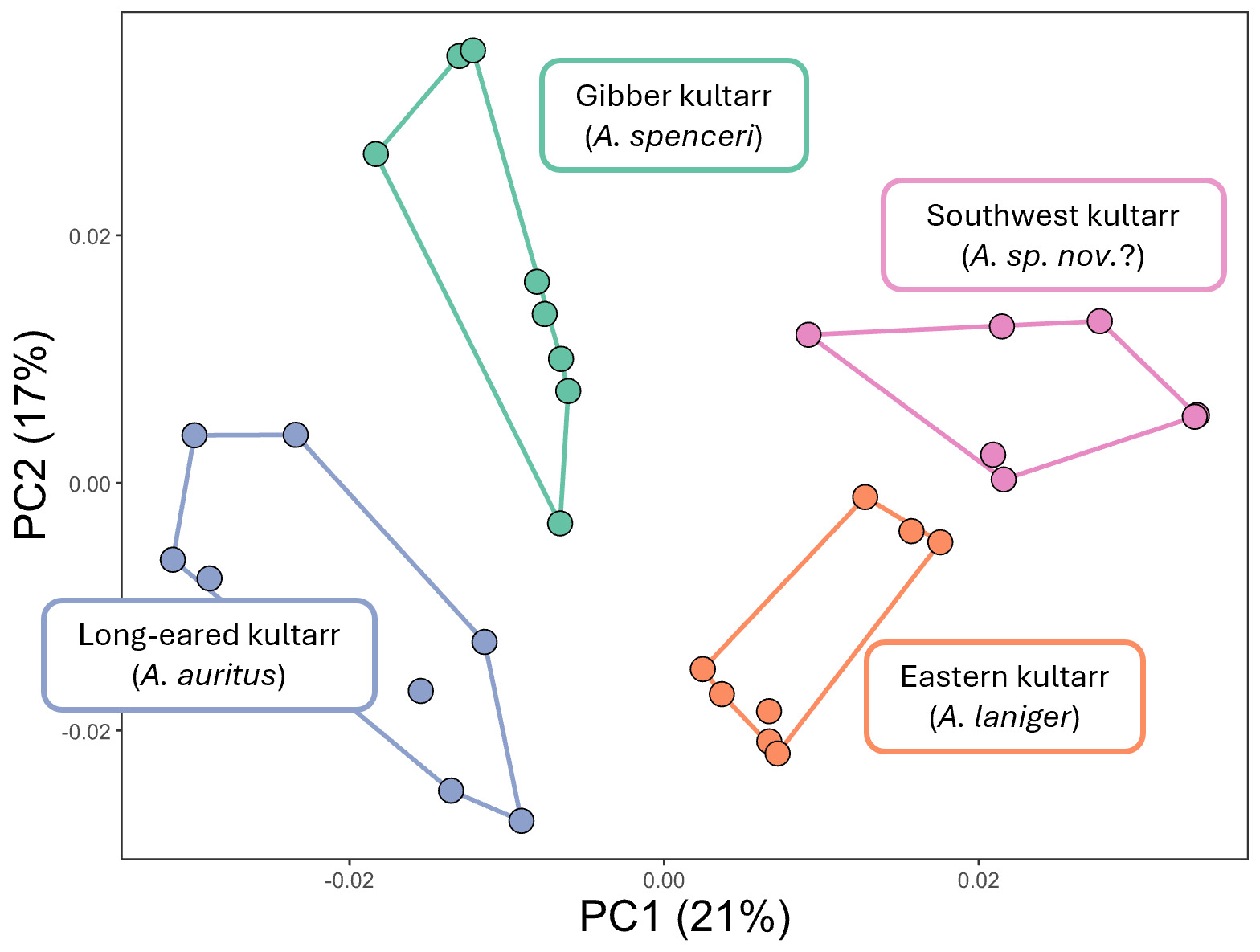
The kultarrs are a group of small insectivorous marsupials found in low numbers across much of the arid zone. They are seldom seen, let alone studied and are often mistaken for hopping mice due to their similar elongated limbs and long brush-tipped tail. For much of their history, kultarrs have been treated as either one or two species, however the first chapter of my PhD found strong evidence that there are at least three species of kultarr found across the arid zone (Dodd et al. 2025). This part of my project focussed on high quality genetic data as well as museum material (largely skulls) to quantify the genetic and morphological differences between species. Interestingly, we identified a morphologically distinct group of skulls from southwest WA, a location where kultarrs had not been captured alive since 1986 and no genetic data was available (Fig. 3). Fortunately, there were two recent camera trap records of kultarrs at Dragon Rocks Nature Reserve (DRNR) in 2023 and 2024. We carried out three pitfall trapping surveys at the reserve with the aim of capturing a kultarr, obtaining a tissue sample, and using genetic data to determine if the southwest WA population is a distinct species.
Three surveys were carried out at DRNR in November 2024, March 2025 and November 2025. There is also a final trip planned in May 2026. We used a combination of Elliott traps and pitfall traps placed across various sites across the eastern portion of the reserve. These were the first high intensity surveys carried out at DRNR since 2003, meaning they provide an important insight into the fauna persisting in this large but isolated reserve. The species we detected were largely similar to those detected in previous surveys at the reserve including the following: western pygmy possum (Cercartetus concinnus), little long-tailed dunnart (Sminthopsis dolichura), honey possum (Tarsipes rostratus), southern ningaui (Ningaui yvonneae), western mouse (Pseudomys occidentalis), house mouse (Mus musculus), western spotted frog (Heleioporus albopunctatus), thorny devil (Moloch horridus), western bearded dragon (Pogona minor), south-western spiny-tailed gecko (Strophurus spinigerus), barred wedge-snout ctenotus (Ctenotus schomburgkii). Unfortunately, no kultarrs were captured across any of our surveys.
As a result of not capturing any kultarrs, we are currently in the process of isolating DNA from historical museum skins collected in southwest WA, with the aim of using this to determine if the southwest population is a distinct species. The project is ongoing; however we aim to decide the species status of the southwest kultarr later in 2026.
Funding from the John Glover Award supported fieldwork equipment and expenses for the March 2025 and November 2025 surveys. We had initially budgeted for genetic sequencing of the kultarr samples we obtained from our surveys, however as we did not catch any, this money was instead spent on generating a draft genome for the long-eared kultarr (A. auritus) which is found in arid WA. This genome will enable us to better assess the genetic health of all three species of kultarrs across Australia, aiding in conservation management planning.
_of_skull_shape__generated_from_linear_measurements_w.png)
How do predators prefer to move through the landscape? An analysis of telemetry data (Natalie Grassi)
Introduced predators and habitat fragmentation are amongst the greatest drivers of biodiversity loss in Australia. Red foxes (Vulpes vulpes) and feral cats (Felis catus) impose substantial pressures on native fauna, particularly in heavily modified agricultural landscapes (Kearney et al. 2019). In the wheatbelt of southwest Western Australia, broadscale clearing for agriculture has transformed a previously contiguous habitat into a mosaic of small, isolated patches that are separated by a cleared matrix. Native animals that historically moved freely through intact landscapes must now traverse cleared farmland when moving between patches of habitat, increasing their exposure to introduced predators (Lindenmayer et al. 2000), who tend to prefer simpler habitats (Larivière & Pasitschniak-Arts 1996; McGregor et al. 2015).
This project focuses primarily on the Fitz-Stirling (F-S) macro-corridor (Fig. 2), a fragmented agricultural landscape undergoing extensive restoration. F-S provides a model system for understanding how remnant habitat, cleared matrix and revegetation interact to influence predator movement and habitat use. This project also examined fox movements in the adjacent Coastal–Pallinup (C-P) corridor (Fig. 2); an intact landscape with continuous remnant vegetation. C-P functions as a reference system, allowing comparison between predator ecology in a relatively undisturbed environment and a heavily fragmented one.
Extensive revegetation efforts in FS aim to restore connectivity. However, the preference of introduced predators for simpler habitats may restrict native fauna from leaving densely vegetated areas, and the structural simplicity of young revegetation may limit its value as functional habitat if it fails to provide adequate cover from predators. Understanding how introduced predators use fragmented landscapes—including their habitat preferences, movement pathways, and responses to revegetation—is essential for designing effective restoration and targeted predator control.
Specifically, this research examines predator use of remnant vegetation, revegetated patches, and cleared farmland, and aims to identify the various habitats used for home ranges, movement, and foraging. These analyses will identify habitat features that promote or restrict predator movement, highlight areas of concentrated activity suitable for targeted control, and inform the design of future revegetation to reduce predator access and improve safety for native fauna.
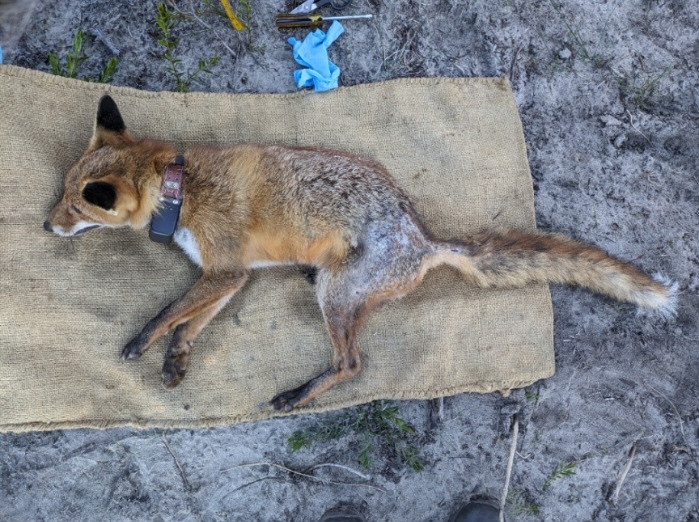
John Glover Award-supported fieldwork was conducted in June 2025 within the Coastal–Pallinup corridor, in collaboration with the Department of Biodiversity, Conservation and Attractions (DBCA) and the Department of Primary Industries and Regional Development (DPIRD). Funding supported the refurbishment of seven Lotek GPS collars (Fig. 4), which were deployed on six red foxes (five females, one male).
Of the collared foxes, three individuals were tracked for one month, while two collars ceased satellite connection prematurely and one fox (the only male) was killed in a vehicle strike. Three collars remain active. Preliminary results indicate that C-P foxes maintain larger home ranges than foxes in the F-S. The C-P foxes exhibited a mean 95% utilisation distribution (UD) home range of 8.52 ± 6.98 km² and a 50% UD core territory of 1.63 ± 1.04 km². In contrast, F-S foxes showed a mean home range of 5.08 ± 1.87 km² and territory size of 1.11 ± 0.57 km².
Preliminary movement models using Correlated Random Walk modelling show that both C-P and F-S foxes exploited remnant vegetation, cleared matrix, and ecotones. Both groups foraged in cleared matrix when it occurred near habitat edges. However, the way these habitats were used differed strongly between landscapes. C-P foxes made longer and more frequent excursions into farmland and appeared to exploit the small remnant fragments embedded within the cleared matrix. In contrast, F-S foxes tended to remain within larger remnant patches and revegetation, showing tight, tortuous foraging movement and only rare, directed excursions into cleared matrix before returning to cover.
Overall, the contrasting movement strategies of foxes in the F-S and C-P corridors show that predator behaviour is tightly linked to landscape structure. Fragmented systems with large remnant blocks and revegetation encourage patch-based foraging and limited matrix use outside of edge territories, whereas continuous systems with scattered fragments promote wider ranging and greater exploitation of farmland. By clarifying how foxes navigate restored and unrestored landscapes, this work provides an evidence base for designing revegetation that limits predator access, strengthens safe movement pathways for native fauna, and guides the spatial placement of predator control to the habitats and ecotones most heavily used by foxes.
.jpeg)
FRESHWATER INVERTEBRATE ECOLOGY
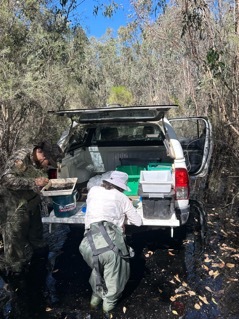
Biodiversity responses in temporary waters due to a rapidly drying climate. (Zac Kayll)
The Swan Coastal Plain (SCP, Fig. 2) is known for its highly biodiverse, groundwater-fed wetlands. However, since 1975, climatic drying has caused groundwater tables, runoff and freshwater biodiversity to decline in streams and wetlands across southwest Australia because waterbodies that were once permanent are now dry for long periods (Sim et al. 2013). Although SCP wetlands have high conservation and community value, impacts of wetland drying on biodiversity are unknown.
In freshwaters, invertebrates are responsible for many ecosystem functions and provide the largest component of animal diversity in these systems (Boix et al. 2016). Loss of diversity and abundance of freshwater invertebrates will negatively affect biodiversity, ecosystem function and the ability to support vertebrate animals. Seasonal wetting and drying patterns (i.e. hydroperiods) are a strong filter on invertebrate communities (Atkinson et al. 2024; Boulton et al. 2014). While invertebrates do have strategies to survive periods of drying, shifts to hydroperiod pose a real threat to biodiversity on the SCP.
To determine the impact of water-regime change on invertebrate biodiversity, we compared a comprehensive dataset of historical invertebrate and water quality data from 1989-1990, when 16 of the 23 wetlands were permanent and 7 were seasonal. The water regime commenced drying in 9 wetlands in early 2000s (Sim et al. 2013). A multiple Before-After Control-impact design was suitable to isolate the impact of climate drying between baseline and 2024 & 2025 collections. Preliminary results of 2024 collections are only discussed here.
Environmental variables, including pH, total nitrogen (TN), total phosphorus (TP), colour, salinity, chlorophyll-a, and % of perimeter surrounded in vegetation) homogenized when comparing baseline and 2024 data (i.e., the variance of Principal Component Analysis, PCA, values was substantially lower in 2024 than in baseline years). This shift was largely driven by lower TN and TP in waters. This homogenization was evident throughout hydroperiod groups. Invertebrate community assemblages also showed a shift away from their baseline at a regional scale. There was up to a 63% drop in species richness in pairwise comparisons to each wetlands baseline years combined. No one individual wetland was comparable to its baseline years assemblage and rather was more related to a wetland within the same hydroperiod group and year. Importantly, Analysis of Similarities (ANOSIM) hypothesis tests showed that the largest shifts in assemblages were exhibited in the subset of wetlands that transitioned to a drier hydroperiod. Species absences, much lower Chironomidae (Diptera) diversity and increases in Cyprididae (Ostracoda) contributed the most to these changes. Interestingly, 2024 assemblage differences in transitioned wetlands were non-specific to drought survival strategy.
These preliminary, regional-level results show that hydroperiod shifts are a significant factor to observed shifts in invertebrate community assemblages. Final data presentation will include land use, vegetation structure and long-term climate variable changes to further isolate the impact of hydroperiod change.
The John Glover Award contributed significantly to these results and facilitated water quality testing, purchasing of a Dissolved Oxygen Meter as well as professional taxonomic work on Copepoda identifications. The funds directly strengthened the data presented.
This project will also test the suitability of newly seasonal wetlands as refugia for desiccation intolerant species (e.g., Amphipoda and Isopoda). As well as a laboratory emergence experiment to determine if there are differences in the egg banks between hydroperiod groups.
Coastal Oceanography
Observations of the 2024/2025 marine heatwave along the Ningaloo coast (Hannah Whitaker)
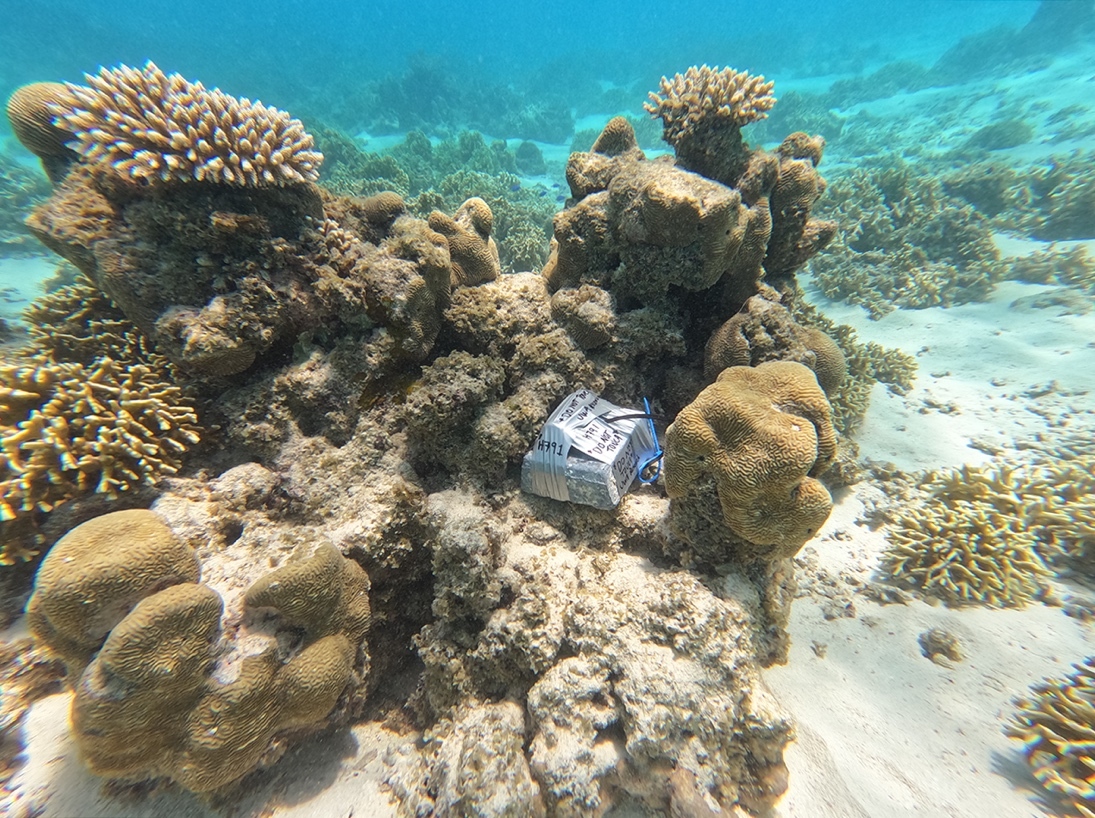
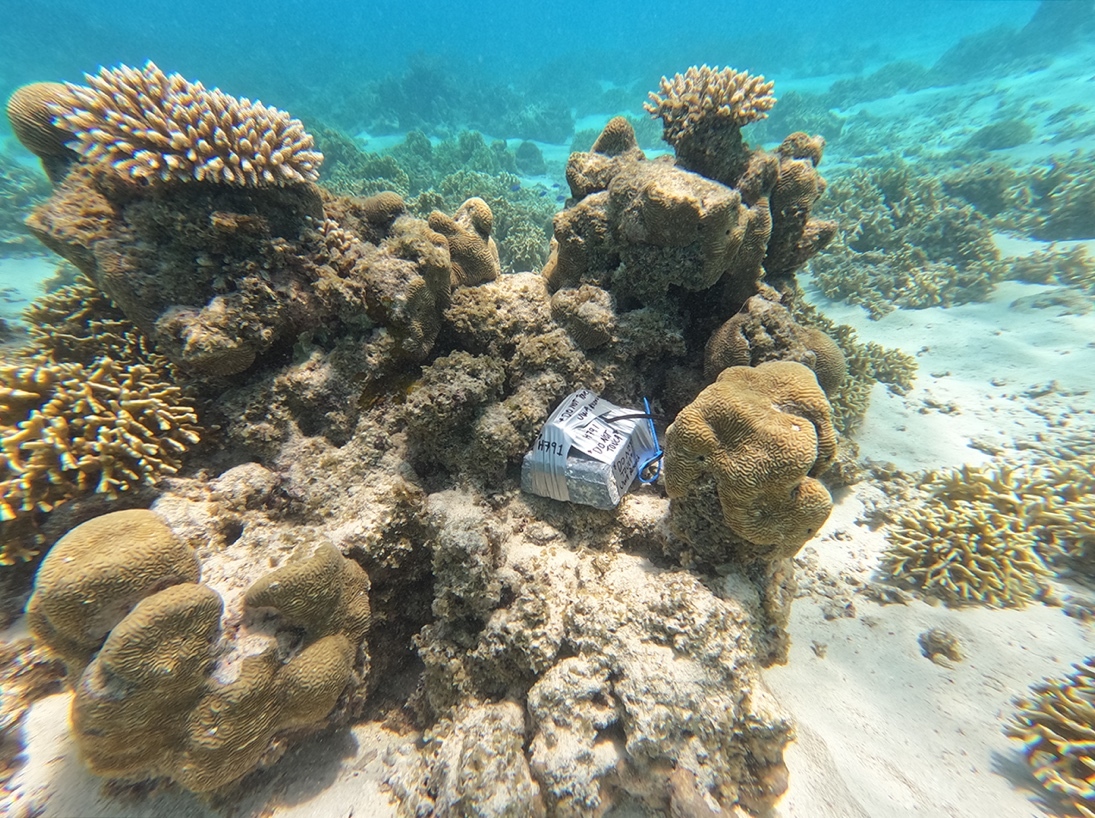
The 2024/2025 marine heatwave was the largest ever recorded in Western Australia and resulted in widespread coral bleaching and mortality along the Ningaloo coast (Fig. 2), a region often cited as a potential climate refuge for coral reefs. Ningaloo’s highly diverse fringing reef ecosystems are characterized by wave-driven circulation and seasonal upwelling, with geomorphological variation between sites often modulating local temperature dynamics as a function of water residence time. For the duration of the heat stress event, we were able to collect continuous temperatures at 27 stations (e.g., Fig. 6) across four reef lagoons with residence times ranging from several hours to several days and assessed site-specific drivers of temperature variability and heat distribution.
As water circulates in a reef lagoon, its temperature changes because of local heat flux processes. We found that sites furthest downstream of the incoming water (near the shoreward edges of the lagoon and in the tidal passages which allow lagoon water to flow back into the ocean) showed the weakest relationship with offshore temperatures. The highest bottom temperatures during the marine heatwave (> 34°C) were recorded at shallow, poorly flushed stations within the reef lagoons. Even on the reef slope (as deep as 30 meters), however, observations consistently exceeded 30°C at the event’s peak.
Wave height was a significant predictor of cross-reef temperature variability at sites with short-to-moderate residence times (2-8 hours) but explained less variability at sites with longer residence times (up to 32 hours). In the case of the latter, atmospheric heat flux processes contributed more substantially to the reef heat balance, which is likely why these sites were characterized by the largest temperature maxima and amplitudes. Such relationships are difficult to resolve using remote sensing techniques at adequate resolution so close to shore. Since temperature-driven coral bleaching events are often the result of acute, stressful anomalies, it is crucial to identify thermal extremes and mitigating factors at local, ecologically relevant scales, which can then inform the impact of regional anomalies on coral reefs.
ACKNOWLEDGEMENTS
Ling-Ling Chen would like to thank her supervisors Hans Lambers, Kosala Ranathunge and Patrick M. Finnegan and her team members Zhao Zhang, Thusitha Rupasinghe, Shu Tong Liu, Joanna Kotula, for their support and help throughout this project. She also thanks Greg Cawthray, Louise Heyworth, Darryl Roberts, Michael Smirk, Patrick E. Hayes, Zhijian Mou and Haibin Kang for their assistance.
Cameron Dodd would like to thank their supervisors Renee Catullo, Linette Umbrello, Kenny Travouillon, Andrew Baker, Raphael Didham and Mike Westerman for their support and mentorship throughout the project. They would also like to that fieldwork volunteers Dylan Walker, Nirjana Dewan, Alen Tanoyo and Jackson Rendall as well as fieldwork collaborators Arianna Urso (Western Australian Museum), Saul Cowen (DBCA) and Belinda Howe (DBCA). We also want to acknowledge the camera survey work carried out by Mark Cowan and Numbat Task Force for detecting kultarrs at DRNR.
Natalie Grassi would like to thank her supervisors — Trish Fleming, Jill Shephard, and Rachel Standish from Murdoch University; Michelle Hall from Bush Heritage Australia; and Sarah Comer from DBCA — for their guidance, support, and expertise throughout this project. Her project was supported by DBCA and DPIRD, who provided the collars for refurbishment, shared the data for their tracked F–S foxes, and led the fieldwork for collar deployment. She is especially grateful to Sarah Comer, Dave Algar, and Abby Martin from DBCA, and Susan Campbell from DPIRD.
Zac Kayll notes that his project would not be possible without the support and guidance of both of his supervisors Assoc. Prof Belinda Robson and Dr. Ed Chester, fieldwork and brain support from Dr. Angus Lawrie at Curtin University, and endless fieldwork enthusiasm from his housemates and friends. He is grateful for funding by a RTP from Murdoch University, and a 2025 recipient of the RSWA John Glover grant.
Hannah Whitaker would like to thank her supervisors Dr. Mike Cuttler, Dr. Camille Grimaldi, and Dr. Ryan Lowe from the University of Western Australia, as well as her supervisor Dr. Kate Quigley from Minderoo. In addition to the support received from RSWA, her work was partially funded by Minderoo and a Robson & Robertson Award. Fieldwork would not have been possible without the assistance of Ronni King, Kat Murphy, Sean Bensadon, Sohrab Boldaji, Teresa Baptista-Nobre, and Sina Pinter.
Zhe Zhang thanks supervisors Hans Lambers (UWA), Kosala Ranathunge (UWA), Duccio Migliorini (UWA, Murdoch University), and Albornoz Ramirez, Felipe (CSIRO) for their guidance and support.
Mnqobi Zuma would like to thank his supervisors Treena Burgess and Sarah Sapsford for their guidance, support, and constructive feedback throughout this project, and Mahesh Galappaththi, Kuenzang Thinley, Sanzida Hoque, and Rajah Belhaj for their assistance in experimental setup and harvesting. Soil collection was conducted in the Northern Jarrah Forest with fire perimeter records and Phytophthora cinnamomi distribution maps supplied by the Department of Biodiversity, Conservation and Attractions. This research was supported by an Australian Research Council Discovery Early Career Research Award to Dr Sarah Saspford [grant number DE220100833].
The authors thank Daniel Gomez Isaza, Jennifer McComb, and David Haig for their constructive comments on drafts of this paper.
The Royal Society of Western Australia acknowledges and respects the enduring and dynamic culture of First Nations people across Western Australia and the Australian continent. We also emphasise that the land and surrounding sea has been a place of learning for thousands of years and we continue in that spirit. We pay our respects to all First Nations people and their Elders past and present.