_map_showing_australia_and_central_asia_localities_and_avian_flyways_fol.tiff)
_an.tiff)
INTRODUCTION
Low diversity foraminiferal assemblages with distinct composition inhabit estuaries and tidal/saline rivers as opposed to diverse populations in shallow-marine open-ocean settings along continental margins (Scott et al. 2001, Murray 2014). Previous studies on estuarine and saline-river environments of south-west Australia (McKenzie 1962, Quilty 1977, Revets 2000, Quilty and Hosie 2006, Ostrognay and Haig 2012, Haig 2020, Tremblin et al. 2021, Tremblin and Walker 2025) have confirmed this general observation and demonstrated foraminiferal morphotype similarity to other such faunas elsewhere in Australia and on other continents. Significant questions persist on how these assemblages, so distinct from the open-ocean inner-shelf faunas, have migrated to isolated estuarine and saline river systems. Mechanisms of biogeographic spread of the Western Australian cosmopolitan-like estuarine assemblages have been discussed (e.g., Tremblin et al. 2021; McGann et al. 2025; Tremblin and Walker 2025) and the biogeography of selected species analysed through molecular studies (Hayward et al. 2021, 2025; Tremblin et al. 2021).
A sample collected in late 2016 downstream from the Springdale Road crossing of the Jerdacuttup River near Hopetoun in southern Western Australia (at locality 1, Fig. 1) found an unusual living foraminiferal assemblage epiphytic on Ruppia seagrass. This included abundant representatives of the organic-cemented agglutinated foraminifera genus, Birsteiniolla Mayer 1974, previously identified with taxonomic confidence solely in interior seas and saline lakes in central Asia. The discovery prompted more detailed sampling in 2019. The river was revisited in late March 2026 and photographs taken of the living Ruppia, and the foraminiferal epiphytes were re-observed to add more ecological observations.
A preliminary record of the Birsteiniolla occurrence in the Jerdacuttup River is made here, together with a record of associated fauna. Birsteiniolla at the studied site is morphologically compared to the type species of the genus from Lake Issyk-Kul’ in Central Asia (Fig. 1), and other specimens of the species illustrated from the Aral and Caspian Seas and the nearby cave lake at Kaptar-Khan. Associated foraminiferal species found alongside Birsteiniolla in the Jerdacuttup River are compared to those found in the Central Asian localities. Observed environmental parameters are discussed; possible explanations offered for the biogeographic distribution of the genus; and future more-detailed studies are suggested.
MATERIAL AND METHODS
An initial 2016 sample was taken with a small pipe dredge from the riverbank. In 2019, samples (Table 1; Fig. 1) were collected using a tethered pipe dredge from a kayak. Each sediment sample was placed in a small plastic jar and covered with ambient river water. Within hours of collection, the water-covered samples were examined under a stereomicroscope and specimens picked. This allowed observations on living foraminifera. Samples were subsequently washed in freshwater and dried. Representative foraminiferal assemblages were picked and mounted on gridded micropalaeontological slides. All washed samples and slide mounts with foraminiferal assemblages and figured specimens are curated in the collections of the Earth Science Museum at the University of Western Australia.
_map_showing_australia_and_central_asia_localities_and_avian_flyways_fol.tiff)
RESULTS
River setting and occurrence of Ruppia megacarpa
The Jerdacuttup River originates in cleared agricultural land north of Ravensthorpe and flows approximately 105 km across the alluvial catchment before discharging into the Jerdacuttup Lakes, a permanently closed coastal lagoon. The river channel is bordered by a swamp of dense paperbark trees and samphire. On its end-course, the Jerdacuttup Lakes were formerly an estuary that probably developed during the mid-Holocene sea-level highstand (8-4 ka in Western Australia, Lewis et al. 2013). The former tidal inlet is now sealed by sand dunes 12 m above sea level and 60–120 m wide at the narrowest point (Fig. 1b). Due to the permanent closure from the ocean, lake salinities are highly dynamic and range from approximately 10 to >200 ppt depending on seasonal rainfall, evaporation, and the magnitude of freshwater inflow (Lim and Tweedley 2025).
The region is characterised by wet winters and hot, dry summers, with mean annual rainfall of 424.2 mm near Ravensthorpe and potential evaporation substantially exceeding precipitation at 1,500–2,000 mm per annum (Department of Environment, DoE, 2005). Water temperatures across the river system range from 10.0°C to 27.7°C, varying with season and tidal fluctuation (DoE, 2005). The Jerdacuttup River and Lakes support 95 bird species (DoE 2005; Harris et al. 2008), including four trans-equatorial migratory waders protected under the Japan–Australia Migratory Bird Agreement (JAMBA), and two nationally threatened species: the Hooded Plover (Thinornis cucullatus) and the Freckled Duck (Stictonetta naevosa). As foragers, they substain their nutrition by feeding on the various macroinvertebrate communities including oligochaete worms, gastropod molluscs, crustaceans, and insects that inhabit the river and surrounding vegetation (DoE 2005; Harris et al. 2008; Steward 2009).
Within the Jerdacuttup River, Ruppia megacarpa R. Mason (Potamogetonaceae) establish large and dense meadow stands within the shallow river system (DoE 2005, and observations of this study). Common in the South-West region, Ruppia megacarpa is a thin, long slendered branching seagrass with filiform like leaves alternating, 5 to 25 cm long, and 0.4 to 1.0 mm wide (Brock 1982a). The genus Ruppia has the widest salinity tolerance among submerged macrophytes globally and is broadly distributed across saline coastal lagoons, estuaries, and inland salt lakes; however, individual species differ substantially in their physiological tolerances. In Australian systems, R. megacarpa is documented from habitats with salinities between approximately 5 and 46 ppt (Brock 1982b), substantially narrower than the annual R. tuberosa, which persists across a range of 13–230 ppt (Kim et al. 2013).
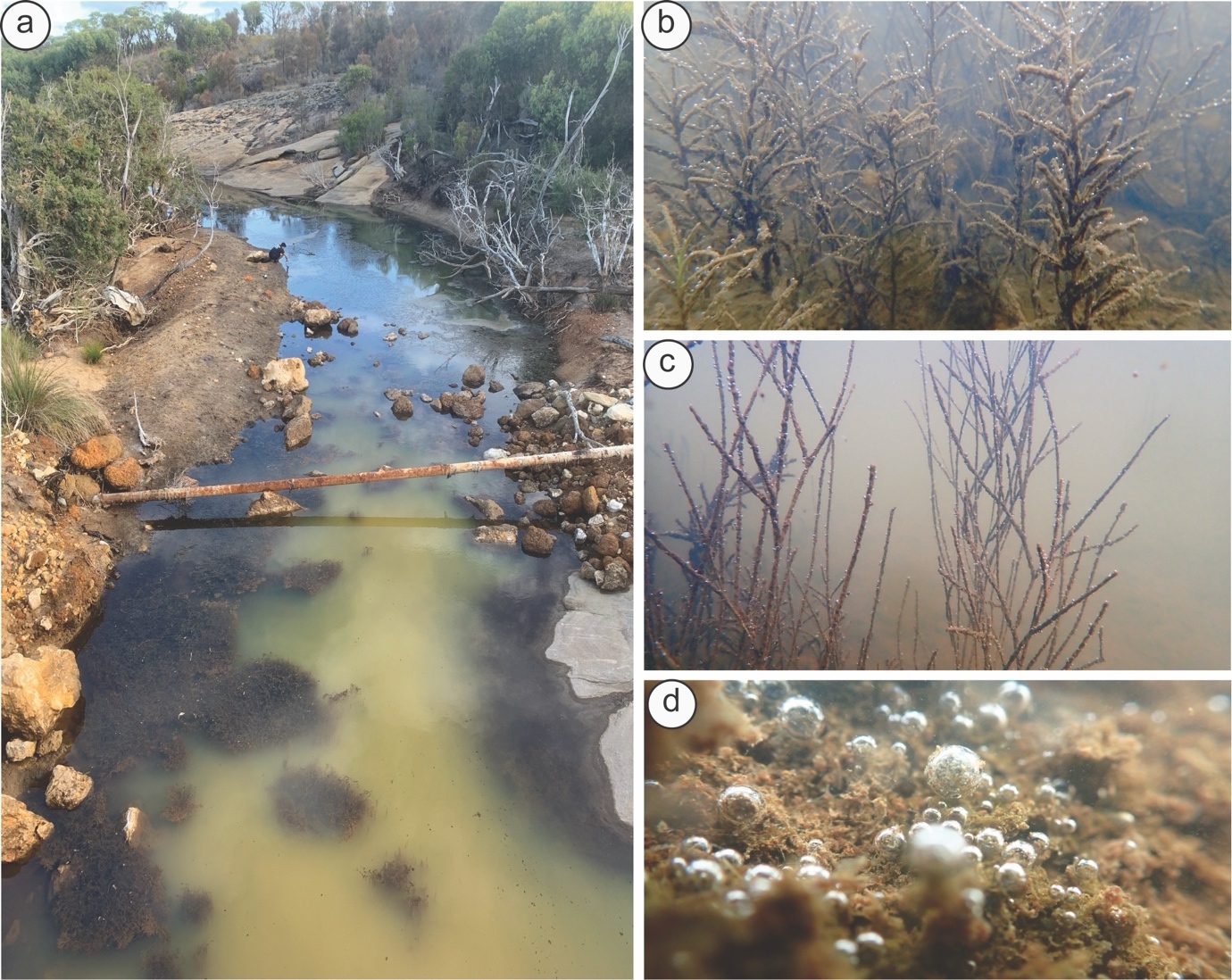
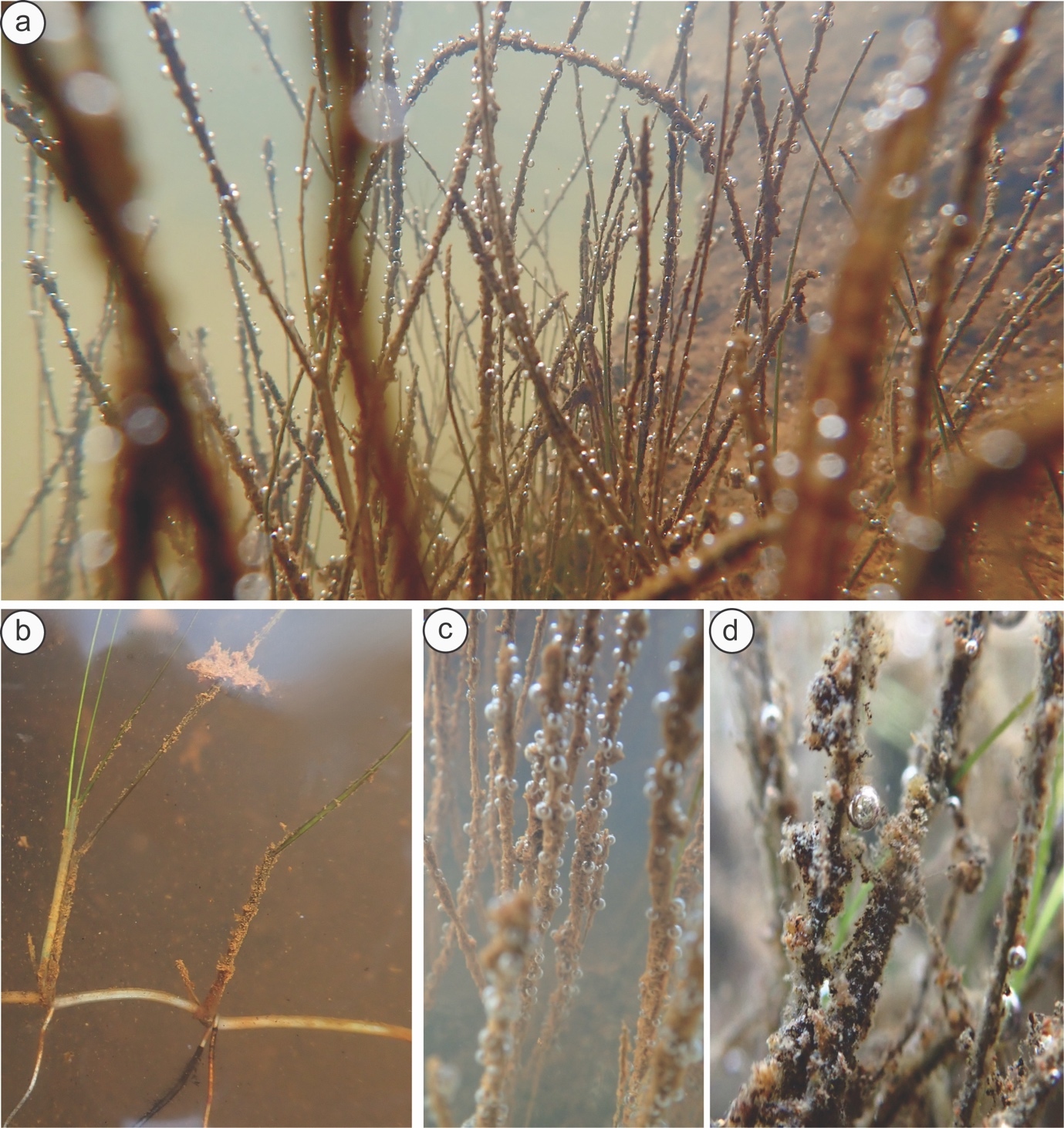
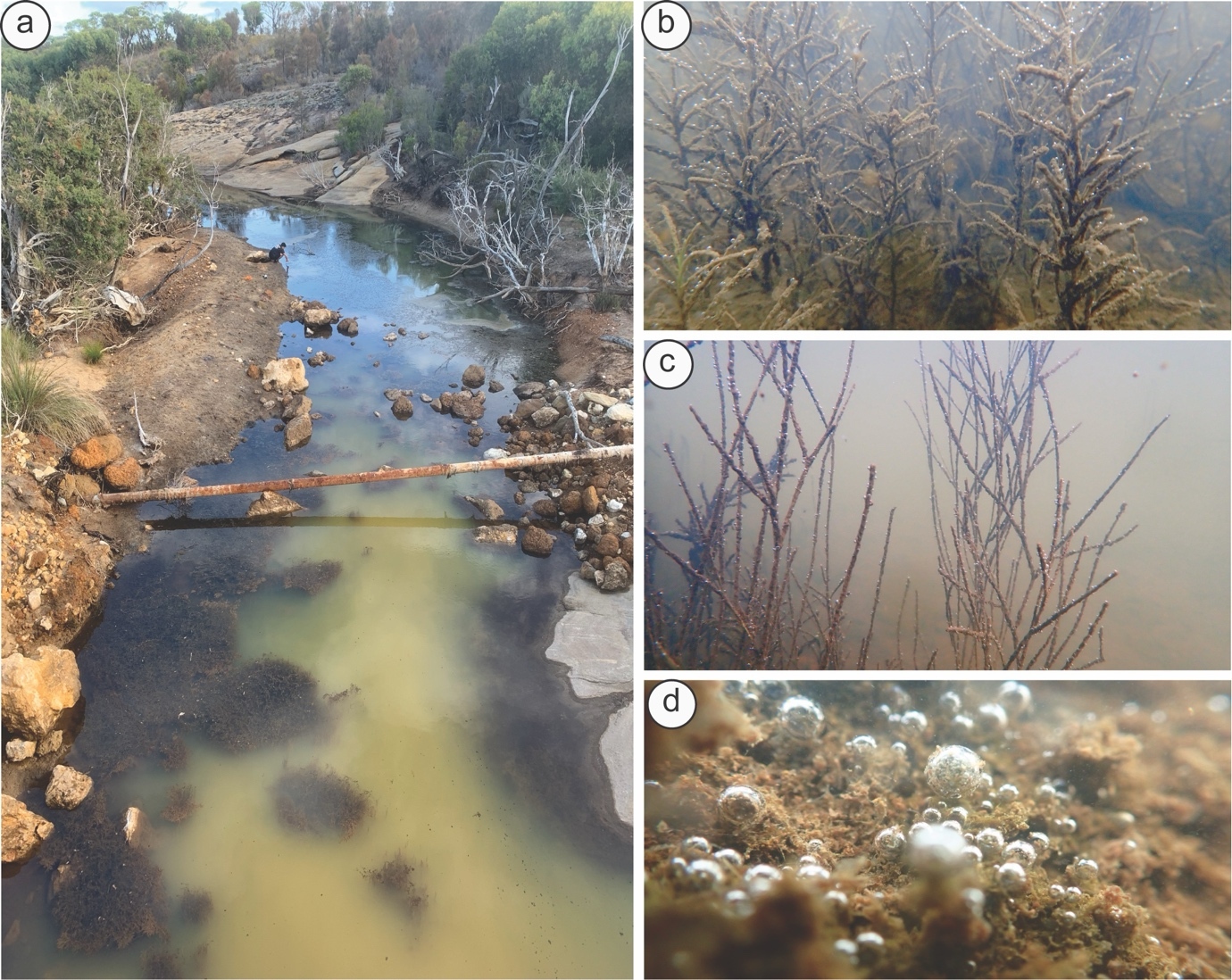
A conspicuous feature of R. megacarpa throughout the Jerdacuttup River is the development of a thick and dense epiphytic biofilm on stems and branches (Figs. 2, 3b–d), with oxygen microbubbles adhered to biofilm-colonised surfaces indicative of active photosynthetic activity (Figs. 1a, 1c–d, 2d). Based on our observations, living specimens of the organic-cemented agglutinated foraminifera Birsteinolla gr. macrostoma (in late 2016) and Scherochorella gr. barwonensis (September 2019, February 2026) were recorded inhabiting the epiphytic biofilm, which probably included diatoms, on R. megacarpa stems. Living foraminiferal populations suggest the Ruppia stems and their biofilm represent a functionally distinct niche within the broader estuarine environment, one whose loss would not simply reduce habitat area but alter the microhabitat mosaic available for certain species.
_dens.jpeg)
General composition of foraminiferal assemblage
Four organic-cemented siliceous agglutinated species plus two calcitic rotaliine taxa have been observed in the sampled stretch of Jerdacuttup River (Table 2, Figs. 4 and 5). The low diversity, absence of carbonate-cemented agglutinated and porcelaneous (Miliolida) foraminifera, and dominance of small calcitic rotaliines such as Ammonia are characteristic of hyposaline south-west Australian estuaries (McKenzie 1962; Quilty 1977; Revets 2000; Quilty & Hosie 2006; Ostrognay & Haig 2012; Haig 2020; Tremblin et al. 2021; Tremblin & Walker 2025). The Jerdacuttup River assemblage has no species in common with the diverse foraminiferal fauna from the shallow-marine open waters of the inner-neritic zone (e.g., that reported by Buosi et al. 2020 off Esperance about 150 km to the east).
Comments on foraminiferal identifications
Within the sampled reach of the Jerdacuttup River, each morphospecies is readily distinguished on morphological grounds. Equating these with superficially similar forms from other river systems or other continents is, however, inherently imprecise: molecular studies and detailed morphological comparisons have repeatedly demonstrated that broadly similar foraminiferal morphotypes frequently represent distinct phylospecies (Hayward et al. 2021, 2025).
Living specimens of only one of the species, viz. Ammonia haigi, in the Jerdacuttup River have been sequenced (Hayward et al. 2021). The species is conspecific with an assemblage that includes the holotype from Walpole Inlet, about 350 km westward along the southern Australian coast from the study site (see discussion below). This phylospecies belongs to the cosmopolitan A. tepida morphogroup (Hayward et al. 2021) and was previously referred to as Ammonia gr. tepida by, for example, Ostrognay and Haig (2012) from tidal rivers in the Peel district of Western Australia.
The other species recognized in the Jerdacuttup River require DNA analysis before definitive species identifications can be made. One of the species is compared to a type molecularly characterised elsewhere in a southwest Australian estuary. For others which are close morphological analogues of species known on other continents a “group” designation (viz. “gr.”) is made.
Birsteiniolla gr. macrostoma Yankovskaya and Mikhalevich
Loeblich and Tappan’s (1987, p. 53) interpretations of the authorship of the species described by Yankovskaya and Mikhalevich (1972, p. 1005–1007; and attributed to “Mayer”) and by Mayer (1974, as new genus and species) are accepted with some reservation. This particularly applies to their selection of the figured specimen of Yankovskaya and Mikhalevich (1972, pl. 1, fig. 1a–c) from Lake Issyk-Kul’ as a lectotype for Birsteiniolla macrostoma rather than from among the “type material” designated by Mayer (1974, p. 141; mentioned as being housed in the collection of the Department of Invertebrate Zoology, Moscow State University).
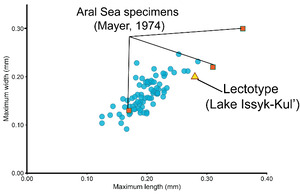
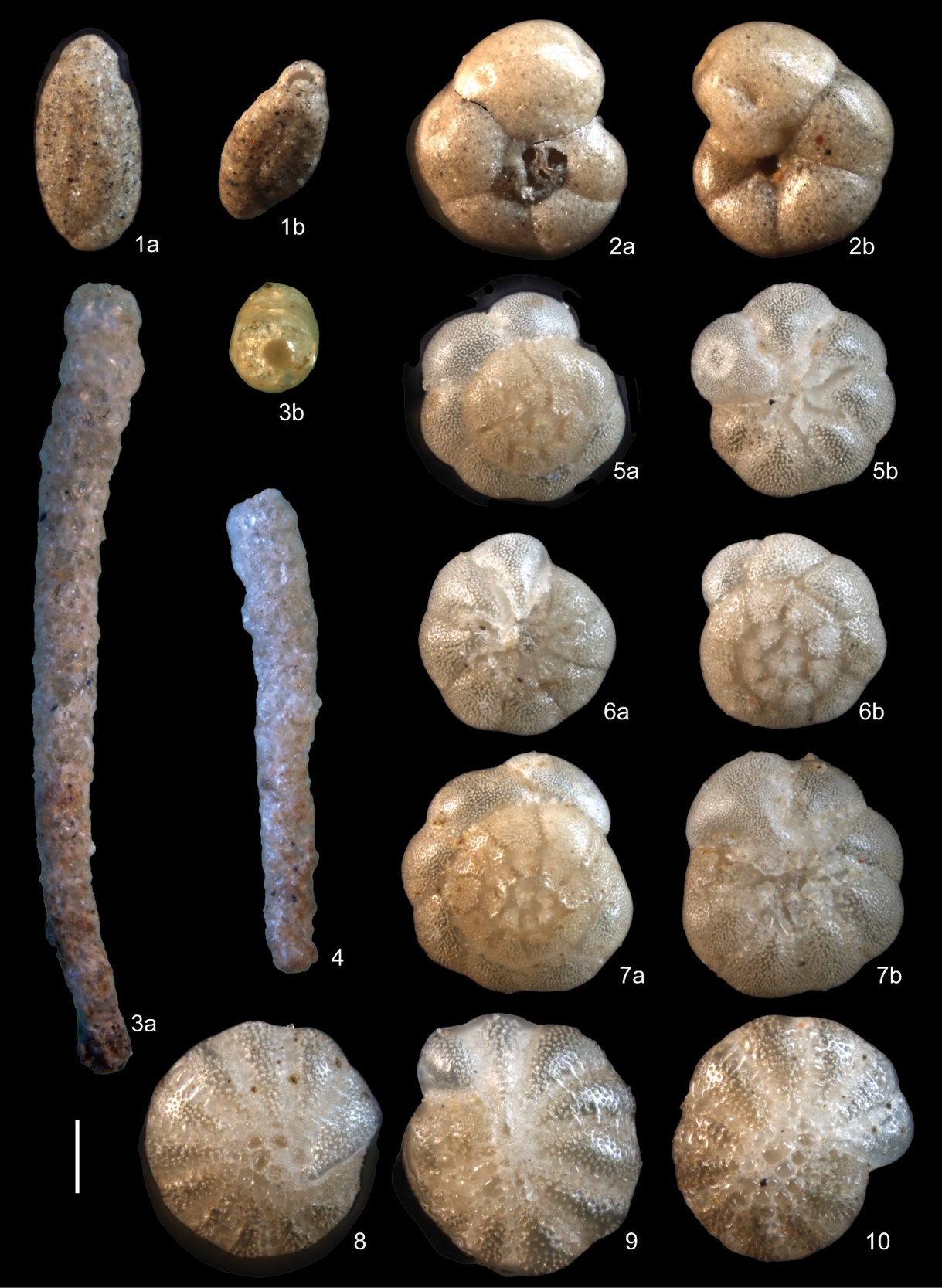
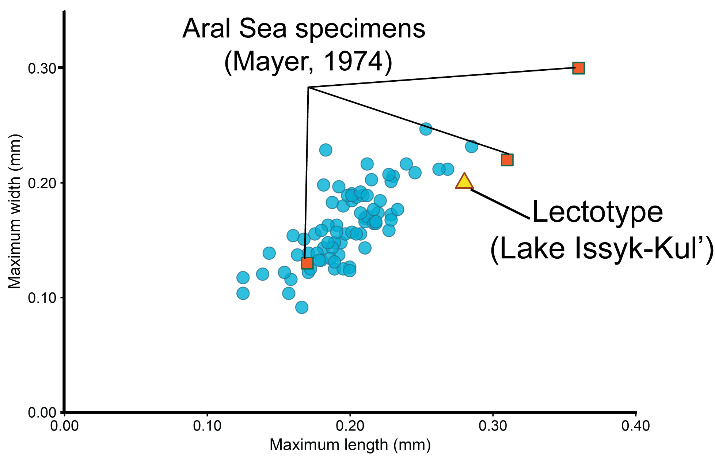
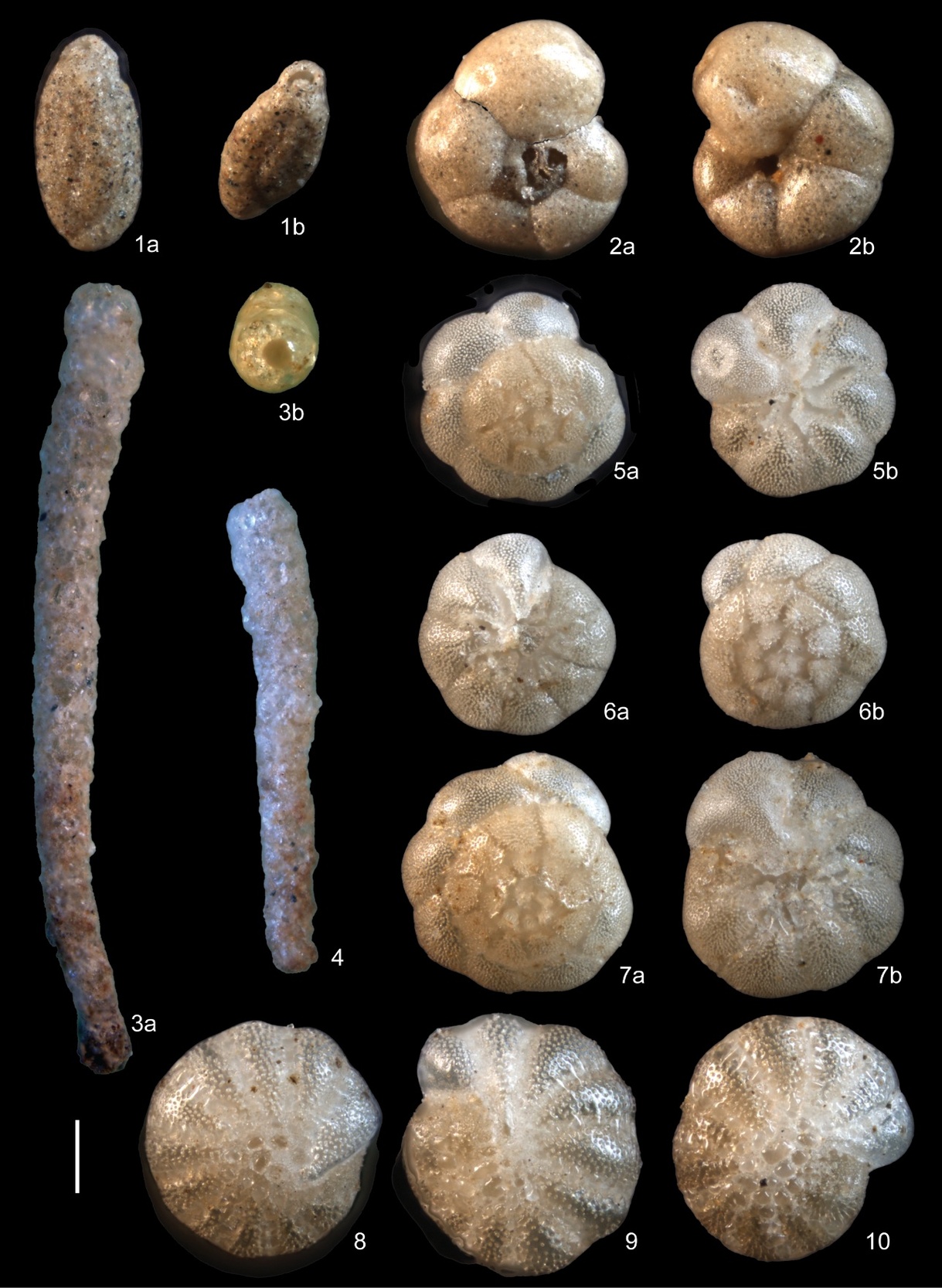
The Jerdacuttup specimens (Fig. 4) are very close morphologically to the type specimen figured by Yankovskaya and Mikhalvich (1972, fig. 1, 1a–c) and to the numerous specimens illustrated by Mayer (1974, figs. 1–3). The species is characterized by compressed milioline coiling with two chambers per whorl. In the adult stage, these are positioned apart at almost 180°. Other characteristics are a rounded periphery, a large broadly arched aperture with the terminal wall bordered by a thickened lip but without a basal apertural tooth, and a thin agglutinated wall. In the Jerdacuttup specimens, the base of the aperture either lies on the wall of the penultimate chamber (e.g., Fig. 4, no. 1b) as in the lectotype, or the aperture is slightly raised on a low neck (e.g., Fig. 4, no. 6a, b) as in many of Mayer’s (1974) figured specimens. There are transitions from a high basal arched aperture with no peristome (Fig. 4, no. 1b), to an aperture with complete peristome (e.g. Fig. 4, no. 4b), to an aperture at the end of a short neck raised above the penultimate chamber (Fig. 4, no. 6a, b). The wall in the Jerdacuttup specimens is made of a mosaic of mostly quartz grains of varying size (e.g. Fig. 4, no. 2) held together by an organic cement. Although Mayer (1974, p. 141) mentioned that Birsteiniolla macrostoma did not have a “pseudochitinous base” to the wall and was instead “weakly cemented” (in some areas with carbonate), his observation that dry specimens deform suggests that organic cement binds the sediment grains (which may include some carbonate grains depending on their availability). In the Jerdacuttup specimens, rare dark mafic mineral grains are also present in the wall. The presence of organic rather than siliceous cement is shown by disaggregation of the wall when the test is placed in bleach. In Jerdacuttup River, no carbonate component is present in the wall (as shown by the lack of a reaction to dilute HCl acid). Among the numerous specimens picked from sample 183876, the maximum test length is 285 µm with maximum width of this specimen 232 µm. The range of length vs. width dimensions (Fig. 5) shows that the lectotype and most of Mayer’s illustrated specimens are slightly larger than the specimens in the Jerdacuttup assemblage but have similar proportional measurements. Mayer (1974) recorded the largest test length for B. macrostoma in the Aral Sea as 425 µm, and in the Caspian Sea as 350 µm.
Mayer (1974) compared Birsteiniolla macrostoma with Trilocularena patensis Closs from a brackish-water lagoon in Brazil. The latter species typically has an elongate narrow triloculine test (see Brazilian mangrove specimen figured by Semensatto 2020, pl. 3, fig. 18 in an atlas of Brazilian mangrove species; and Brazilian lagoonal specimens figured by Debeney et al. 1998, pl. III, figs. 7 and 8). A specimen from the Rio Grande do Sul (Brazil) attributed to T. patensis by Leipnitz et al. (2014, pl. 1, fig. 11) appears to have a similar test shape to some morphotypes within B. macrostoma but is much larger (650 µm, maximum length). As in Birsteiniolla, this specimen lacks a basal toothplate and therefore differs from the type species of Trilocularena (viz. Miliammina circularis Heron-Allen and Earland) which has a distinct broad low basal toothplate (Loeblich and Tappan 1955).
Mayer (1974, p. 147) also mentioned the possibility that Birsteiniolla macrostoma was present in Saharan groundwater in northern Africa. Gauthier-Lièvre (1935) reported the occurrence, in an artesian lake and in canals related to irrigation, of several miliolid foraminifera which he could not identify. He illustrated, as a line drawing (his fig. 2c), an agglutinated test with architecture and size comparable to some typical B. macrostoma.
In Miljacka II Cave in the Dinaric karst region of Croatia, a new species (Spirolocammina petrae Siemensma, Bakovic and Holzmann) was described and illustrated in a study by Bakovic et al. (2025). The species was characterized by planispiral coiling and has a final chamber drawn out in a long neck with no tooth in the aperture. The illustrations (Bakovic et al. 2025, fig. 5 C–I) show slightly irregular coiling, a similar siliceous agglutinated wall to that in Birsteiniolla macrostroma, but a much longer neck. Although DNA was extracted from the only living specimen found, no sequence was obtained (Bakovic et al. 2025, p. 9).
Brackish estuarine specimens from Israel figured by Avnaim-Katav et al. (2016, pl.1, figs. 1, 2) as Birsteiniolla macrostroma differ from the Jerdacuttup River specimens by having a thicker wall which is finer grained, apparently calcareous composition, coiling closer to a quinqueloculine mode, and a possible minute tooth positioned centrally on the apertural floor. Any relationship between these requires closer comparison of assemblages and DNA analysis.
In Australia, agglutinated species with milioline/quiqueloculine chamber arrangements, referred to Miliammina Heron-Allen and Earland, have been reported from many estuaries (e.g., from Western Australia by McKenzie 1962, pl. 1, fig. 1 from Oyster Harbour; Quilty 1977, fig. 9 from Hardy Inlet; Revets 2000, pl. 1, figs. 11,12 from Leschenault Inlet; Ostrognay and Haig 2012, from Collie River). Among the Australian-wide records, only one may belong within the Birsteiniolla macrostroma group. Miliammina edens Bell (1995, p. 230, 231, fig 3, nos. 1–3) from Lake Connewarre in the Barwon River estuary, Victoria (Fig. 1), seems morphologically like Birsteiniolla from the Jerdacuttup River. Study of morphological variation and DNA comparisons are necessary before a conspecific relationship can be confirmed.
_an.tiff)
Miliammina? sp.
The taxonomy of living and fossil species that have been referred to Miliammina is confused. Variability in chamber arrangement, the presence of an apertural neck, the significance of a basal tooth in the aperture, as well as the presence of siliceous cement binding the agglutinated grains in the wall (rather than organic cement) are key points that require more detailed investigation particularly in a four-dimensional eco-stratigraphic framework. The type species, Miliammina earlandi Loeblich and Tappan (originally called Miliolina oblonga var. arenacea Chapman) from bathyal water depths in the Antarctic Ross Sea, is quinqueloculine with a siliceous wall (“minute mineral grains in an excess of siliceous cement”) that is “smoothly finished or polished” (Loeblich and Tappan 1955, p. 12, 13, pl. 1, figs. 15, 16). The lectotype of M. earlandi has a short apertural neck with a distinct tooth (Loeblich and Tappan 1955, fig. 15c). It seems highly improbable that a bathyal species could also inhabit very shallow-water brackish estuaries and tidal rivers. Many estuarine morphotypes have been referred to Miliammina fusca Brady which, according to the apertural view originally figured by Brady (1870, pl. 11, fig. 2c), lacks an apertural neck and a basal tooth.
Western Australian estuarine specimens that are tentatively placed as Miliammina? sp. (including rare specimens from the Jerdacuttup River, e.g., Fig. 6, nos. 1a, b) lack a well-developed neck and have a broad raised basal tooth that sits on the wall of the penultimate chamber. The test wall does not react with dilute 2% HCl but disaggregates in bleach. This indicates that the siliceous mineral grains are bound by organic cement. These records include McKenzie (? 1962, pl. 1, fig.1, as M. fusca, from Oyster Harbour, apertural view not figured); Quilty (? 1977, fig. 9, as M. fusca, from Hardy Inlet - apertural view not figured); and Revets (2000, fig. 12, as M. fusca, from Leschenault Inlet, with distinct apertural tooth); and Ostrognay and Haig (2012 as M. fusca from Collie River). In unpublished records, Miliammina? sp. is widespread in southwest Australian estuaries and tidal rivers.
Based on specimens collected from a brackish-water environment in Georgia (USA) and attributed to Miliammina fusca, phylogenetic molecular data (Habura et al. 2006) has suggested a relationship between Miliammina and the calcareous Order Miliolida. A figured specimen from the analysed population has a distinct apertural neck (Habura et al. 2006, fig. 4). The presence of a basal tooth is not illustrated nor described. The morphological-taxonomic affinity of this specimen is uncertain.
Scherochorella gr. barwonensis (Collins)
Collin’s (1974, p. 8, 9, pl. 1, fig. 1) Reophax barwonensis from the Barwon River estuary in Victoria (South Eastern Australia), is reassigned to the long-ranging organic-cemented agglutinated Scherochorella Loeblich and Tappan by having a narrowly elongate cylindrical test composed of closely appressed chambers separated by horizontal sutures with the chambers increasing very gradually in size. The holotype of S. barwonensis has an initial globular proloculus of wider dimensions than the immediately following chambers, and 10 chambers in a test length of 0.57 mm. The maximum test width is 0.14 mm. Jerdacuttup River specimens reach a maximum length of 1.16 mm, with > 25 chambers and a maximum width of 0.13 mm. The initial chamber is either globular, or the first few chambers are smaller and more irregularly arranged. This suggests that microspheric and megalospheric tests may be present.
In unpublished records, representatives of this species are widespread in estuaries and tidal rivers in southwest Australia. It may be the species referred to Protoshista findens by Quilty (1977, fig.8) from Hardy Inlet; Leptohalysis catella by Revets (2000, pl. 1, figs. 9, 10) from Leschenault Inlet; and is the foraminifer referred to as “Warrenita sp.” by Ostrognay and Haig (2012) from the Collie, Murray, and Serpentine rivers. Based on type species (see Loeblich and Tappan 1987), Protoshista Eimer and Fickett differs from Scherochorella by having a test with several branches of uniserial chambers; Leptohalysis Loeblich and Tappan differs from Scherochorella by having a much more fragile test with flask-shaped loosely embracing chambers; and Warrenita Loeblich and Tappan differs from Scherochorella by having a slit-like rather than large circular aperture.
Trochammina gr. inflata (Montagu)
This is a cosmopolitan estuarine group, particularly common in marshes (Scott et al. 2001; Debenay and Guillou 2002). DNA analyses will probably subdivide the group into regional phylospecies. Representatives have been reported in southwest Australian estuaries and tidal rivers by McKenzie (1962, pl. 1, fig. 7, 8) from Oyster Harbour, and Quilty (1977, fig. 12) from Hardy Inlet. Unpublished records in the UWA foraminiferal collection, indicate the species is widespread particularly in marshes in southwest Australia.
Ammonia haigi (Hayward and Holzmann)
The most abundant and widespread foraminiferal species in the sampled stretch of Jerdacuttup River is Ammonia haigi. Representatives from the Jerdacuttup River population were sequenced by Hayward et al. (2021) allowing the phylospecies to be distinguished from other members of the morphologically defined Ammonia tepida group (see Hayward et al. 2021, p. 168, 169, pl. 5, figs. 11, 12, pl. 7, figs. 10, 11, pl. 30, figs. 7–9). Other sequenced specimens from southwest Australia in the Hayward et al. (2021) study came from the Young River, Kalgan River, Walpole Inlet, Hardy Inlet on the south coast of Western Australia, and from mangroves from New Beach south of Carnarvon.
Hayward et al. (2021, p. 156, 169) noted that Ammonia caspica Shchedrina from the Black, Caspian and Aral seas is morphologically close to A. haigi but differs with a “slightly finer porosity, large folial flaps extending into the umbilicus, and lower convexity on the spiral size”. Ammonia caspica has not been sequenced. Ammonia haigi is also close morphologically to A. arabica from India and the Maldives but the latter species has “imperforate folia” and “a pustular umbonal boss” and is molecularly distinct (Hayward et al. 2021, p. 149, 169). Among known phylospecies of Ammonia recorded by Hayward et al. (2021, text-fig. 2), A. advena (Central and southern North America) and A. kitazatoi (northern Pacific Ocean) have closest evolutionary relationships to A. haigi.
Cribroelphidium sp. cf. C. revetsi Hayward and Holzmann
The Jerdacuttup species (Fig. 6, nos. 8–10) has features that suggest that it is morphologically close to Criboelphidium revetsi Hayward and Holzmann (in Hayward et al. 2025, p. 503, 504, pl. 8, figs. 1–6), Cribroelphidium knudsenae Hayward and Holzmann (in Hayward et al. 2025, p. 500, pl. 5, figs. 6–16), and Cribroelphidium lidoense (Cushman). According to the PhyML phylogenetic tree of Hayward et al. (2025), these species are closely associated within Clade F of the elphidiids sequenced. The holotype of C. revetsi was designated from Walpole Inlet (southern Western Australia; about 350 km west of the Jerdacuttup River) from where a specimen was also sequenced. The holotype of C. revetsi has much more prominent tubercles filling the umbilical area than have the Jerdacuttup specimens. Cribroelphidium knudsenae has a widespread global distribution but in some places may be non-indigenous. It differs from the Jerdacuttup species by having fewer, less developed tubercles in the umbilical region. Cribroelphidium lidoense also has wide distribution. Based on the description and figures of Hayward et al. (2025, p. 501, 502, pl. 7, figs 1–20), the species differs from the Jerdacuttup morphotypes by very weak development (almost absence) of ponticuli over the radial sutures. It is like the Jerdacuttup species in having prominent tubercles in the umbilical area and in its coarse wall porosity. Among the unsequenced species described by Hayward et al. (2025, p. 493, 494, pl. 2, figs. 1–10), Cribroelphidium caspicum (Mayer) from the Caspian Sea generally has more depressed sutures and stronger ponticuli than in the Jerdacuttup River species, but apparently includes morphotypes (Hayward et al. 2025, pl. 2, figs. 4, 5) that have very shallow broad sutures and weak but long ponticuli (e.g. their pl. 2, fig. 4) that form rudimentary circular ribs similar to those very faintly shown on the Jerdacuttup specimens.
Distribution of foraminiferal species in studied river
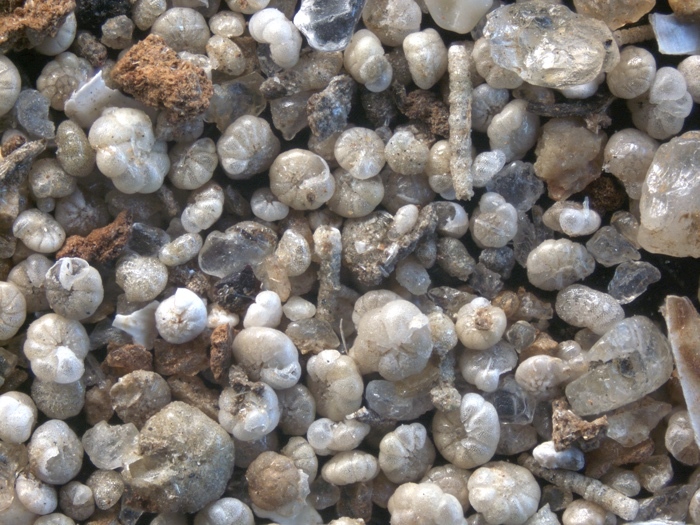
Only one of the species, Ammonia haigi, is abundant in all studied samples (Table 2). The others show patchy distribution probably related to specific microenvironments on the river floor. The sand fraction of sandy mud sample 183971 is mostly composed of foraminiferal tests (Fig. 7) with A. haigi the overwhelmingly dominant species. In other samples fine quartz is the main mineral component, and the foraminifera (with A. haigi dominant) are much less conspicuous.
In the 2016 sampling near the Springdale Road bridge (around locality 1), Birsteiniolla gr. macrostroma was observed to be living in abundance on the stems of Ruppia megacarpa. But during the 2019 sampling and in our 2026 observations it was only rarely encountered. In 2019, Scherochorella gr. barwonensis was common on Ruppia at locality 2. An epiphytic biofilm on the Ruppia stems (see Fig. 3) may have provided a food source (? diatoms) for the foraminifera. During early 2017, shortly after the 2016 sampling, a major flood occurred in the river which no doubt disrupted foraminiferal populations, particularly on the Ruppia stands.
A detailed study of foraminiferal microhabitats on the river floor and banks still must be undertaken. This should be done in conjunction with collection of much more detailed environmental data. The range of habitats and the controlling environmental parameters that determine the patchy distributions of most of the species should be an aim of future work.
._the_sand_is_dom.jpeg)
DISCUSSION
Comparison of foraminiferal assemblage with central Asian assemblages
As mentioned above, the Jerdacuttup specimens attributed to Birsteiniolla gr. macrostoma appear morphologically like the typical forms of the group illustrated from the Caspian and Aral seas, the lake at the nearby Kaptar-Khan cave and from Lake Issyk-Kul in eastern Kyrgyzstan about 2000 km east of the Caspian Sea. Determination of a conspecific relationship will depend on future DNA analysis.
Few detailed foraminiferal studies have been undertaken on these central Asian localities. There is a lack of high-resolution photographic images of most of the species known from these areas, and there is very limited information on microhabitats. From the Caspian Sea, the distribution of Birsteiniolla is apparently patchy. Mayer (1974) recorded it from the eastern shore of the southern part of the sea, and the west coast in the Apsheron region. It was not recorded in Bagheri and Taheri’s (2026) study of the southern coastal foraminifera. In the Aral Sea, it was found in waters up to 24 m deep and in the lake in the Kaptar-Khana cave in waters up to 2.5 m deep. Yankovskaya and Mikhalvich (1972) reported it from Lake Issyk-Kul at a water depth of 30 m, and in groundwaters at various sites in the Caspian–Aral Sea region.
It is unclear what species shared the same microhabitat or lived near Birsteiniolla macrostoma in the central Asian region. Broadly, from the central Asian localities, Ammonia caspica is usually the dominant species, with other species attributed to the calcareous rotaliines Cribroelphidium, Elphidium, Elphidiella, Hanzawaia, and Trichohyalus, the miliolids Cornuspira and Spiroloculina, and to the organic-cemented agglutinated Ammobaculites, Ammotium, Ammoscalaria, Gaudryinella, Jadammina, Miliammina, and Trochamminita (Yankovskaya and Mikhalvich 1972, Mayer 1974, Riedel et al. 2011, Sadough et al. 2013, Zarghami et al. 2019, Hayward et al. 2021, 2025, Bagheri and Taheri 2026). Many of these genera are known from estuaries and tidal rivers in southwest Australia. As outlined above, Ammonia caspica is close morphologically to A. haigi the dominant species in the sampled section of Jerdacuttup River and in many other estuaries and tidal rivers in southwest Australia. The Cribroelphidium revetsi group of morphotypes in southwest Australia (including C. sp. cf. C. revetsi from Jerdacuttup River) seems close to Cribroelphidium caspicum described from the Caspian Sea.
Migration pathways
Mayer (1974) was puzzled how Birsteiniolla and the other foraminifera could migrate from the Caspian Sea to the Aral Sea and nearby underground waters and to isolated Lake Issyk-Kul about 2000 km to the east. He concluded that the latter occurrence ruled out the possibility that the species and others in these inland waters were refugia from a past broad ocean that closed through Cenozoic tectonism. After considering foraminiferal distributions in these central Asian inland seas and lakes, Riedel et al. (2011) concluded that water birds had transported the foraminifera between the isolated habitats, and that this is “a regular process”. Gauthier-Lièvre (1935) considered such migration to explain the foraminiferal occurrences in artesian lakes and in irrigation canals fed by groundwater in the Saharan Desert. Such migration was also suggested, for example, by Resig (1974) for species in a landlocked salt lake in Hawaii, Patterson and McKillop (1991) for a low diversity assemblage in isolated salt ponds in Manitoba, Hayward and Hollis (1994) for New Zealand brackish-water species, and Milker et al. (2023) for foraminifera living in saline springs in central Germany.
For southern Australian brackish water foraminiferal occurrences, Howchin (1901, p. 9) explained the presence of “Polystomella” foraminifera in the isolated Yorketown Lagoon, South Australia, as being “introduced at some period by sea birds carrying foraminiferal spawn on their legs”. After a detailed review of global occurrences of the organic-cemented agglutinated species Trochamminita irregularis, Tremblin and Walker (2025) concluded that the presence of this species in the brackish Hay River, southern Western Australia, was most likely due to transport by waterbirds that migrated along the East Asian–Australasian Avian Flyway (Bamford et al. 2008; Dai et al. 2026). Water birds, such as the Eurasian Coot (Fulica atra), Red-necked Stint (Calidris ruficollis), Silver Gull (Chroicocephalus novaehollandiae), Fairy Tern (Sternula nereis) and Caspian Tern (Hydroprogne caspia), come to southern feeding grounds in the Australasian summer after breeding in the Northern Hemisphere summer. The migratory journey takes several weeks.
Coughlan et al. (2017) reviewed the ability of water birds to disperse plants, animals, microbes and fungi among isolated habitats. They showed viable dispersal of plant seeds and some small invertebrates (e.g., mussels and crustaceans) attached mainly to bird feathers but also to feet. A review by Green et al. (2023) found that internal transport by waterbirds (through their digestive system) was more important than external transport in dispersing a wide range of aquatic organisms. They also concluded that waterbirds were more effective in long distance transport via gut contents, than, e.g., fish. Guy-Haim et al. (2017) showed that more than 20% of foraminiferal protoplasm remained viable in fish-gut contents after days in the digestive tract.
The Jerdacuttup River occurrence of morphotypes of Birsteiniolla gr. macrostoma like typical specimens in central Asian lakes and interior seas strongly suggests that this species was transported via water birds along the East Asian–Australasian Avian Flyway. The mode of transport was probably in the digestive content of the birds. The other foraminiferal species in the Jerdacuttup River may have been similarly transported. It is noteworthy that all the species here have an inner organic lining at least in the juvenile stage of the test or have a test composed mainly of quartz grains held together by organic cement and this may have countered decomposition in the birds’ digestive systems. The linings and cement are glycoproteinaceous in composition, slow to degrade, and can withstand low pH conditions where calcareous tests dissolve (Alve and Nagy 1986, Allen et al. 2000, Tyszka et al. 2021). Organic linings of foraminiferal tests survive hundreds of millions of years in marine/estuarine mud formations (Tyszka et al. 2021). Playford (2021, fig. 9L, M) illustrated well-preserved foraminiferal organic linings that survived about 290 million years, as well as extraction from mudstone that involved the use of hydrochloric, hydrofluoric and nitric acids. Minute propagule cysts of benthic foraminifera such as Ammonia may be abundant in sediment and may survive under adverse conditions for months (Alve and Goldstein 2003) during which time they could be ingested by water birds and transported.
As well as intercontinental migration to southwest Australia, migration among isolated estuarine and saline river systems in this region may have been facilitated by bird transport. This may have taken place over many millions of years, at least since the latest Cretaceous when the main water-bird groups evolved (Jarvis et al. 2014) and after the present-day continental margin and probably river systems around southwest Australia had developed (Li and Powell 2001).
Future Hypothesis testing
Southwest Australia offers an excellent scientific venue in which to test the propositions outlined above. The estuaries and saline rivers are effectively isolated systems here. Active rivers are few and widely separated. Only rarely do mud plumes emanate from the rivers during flood periods, potentially bringing some mud-dwelling estuarine inhabitants out onto the open shelf. Many rivers remain closed to the sea by sand banks during the long dry season. The Jerdacuttup River flows into a large lake (Fig. 1) that has been cut off from the sea for perhaps six thousand years (Brearley 2005, p. 481). The inner continental shelf is covered in carbonate sand along the west coast, or quartz-carbonate sand on the south coast (Conolly and Von Der Borch 1967, Collins 1988) and, as mentioned in the Introduction, the estuarine/saline river foraminifera have almost no species in common with the open-marine inner shelf fauna, except near the mouths of the estuaries.
Three future research strategies may confirm the importance of water birds in dispersal of the foraminifera among the southwest Australian estuaries and saline rivers:
-
Following methods used by Hayward et al. (2021, 2025) genetic relationships should be determined between morphotypes of the various foraminiferal species both within the southwest Australian region and with comparable morphotypes found in central and eastern Asia (probable source regions on the East Asian–Australasian Avian Flyway). Although complex for those foraminifera that have asexual and sexual reproductive phases, mapping out the genetic drift among these morphospecies may provide further insights into migration pathways.
-
Faecal material of water-bird species, particularly those known to be involved in the East Asian–Australasian Avian Flyway, should be microscopically examined to determine whether foraminiferal tests (including propagules with organic-lined tests) are present, and if any living individuals emerge during incubation in control flasks.
-
Following methods used by Briscoe et al. (2022) to investigate faecal DNA, determine if sequences corresponding to foraminifera (e.g., Ammonia and Cribroelphidium species from southwest Australian estuaries/saline rivers sequenced by Hayward et al. 2021, 2025) and other species sequenced during strategy (1), are represented in the faecal DNA.
Confirming waterbirds as vectors of foraminiferal dispersal would transform our understanding of how these remarkable foraminiferal microorganisms have colonised and connected geographically isolated aquatic systems across vast intercontinental distances. The confirmation may also provide new insights into the evolution of estuarine and interior sea foraminifera at least since the Cretaceous.
ACKNOWLEDGEMENTS
Bruce Hayward, Mark Gunson, and Jenny Bevan are thanked for their assistance and good company on the 2019 collecting trip that included Jerdacuttup River. David Haig is very grateful to The University of Western Australia and its Oceans Institute for providing a stimulating and enjoyable venue for his research in retirement. Clément Tremblin acknowledges the use of laboratory space in the Oceans Institute for his continuing foraminiferal studies. This work has been self-funded. We acknowledge the Wudjari Traditional Owners of the lands where this study took place and recognise their continuing connection to Country.