_view_west_along_the_coastline_towards_hera_.tif)
_gl.tif)
INTRODUCTION
Some carbonate beaches on the north coast of Timor-Leste are strikingly orange, a colour caused not by mineralogy but by biology. Symbiont-bearing larger benthic foraminifera (LBF), including star-shaped genera belonging to the Calcarinidae, are major carbonate producers on Indo-Pacific reef flats and can dominate beach sand composition (Hohenegger, 2006). While the broad distribution of LBF across the Indo-Pacific is well documented the specific microhabitats they occupy on reef flats remain poorly understood.
Biogenic carbonate production on tropical reef flats is the fundamental process sustaining the backbone of low-lying reef islands across most the Indo-Pacific, yet apart from corals and molluscs, the other organisms principally responsible for that production are usually not considered in most carbonate estimates (Hallock 1981; Langer et al. 1997; Fujita et al. 2008, 2009; Lange et al. 2026; Langer et al. 2026). Carbonate budget studies conducted across Indo-Pacific reef systems over the past three decades have established unambiguously that larger benthic foraminifera are in many settings the dominant sediment-producing organisms on reef flats, generating calcium carbonate at rates that meet or exceed those of scleractinian corals and crustose coralline algae (Hallock 1981; Langer et al. 1997; Hohenegger 2006; Langer 2008; Dawson et al. 2014; Fujita et al. 2016). Among all modern carbonate-producing environments, reef complexes stand out as the most biologically productive and geochemically significant. These ecosystems generate approximately 900 million tons of carbonate material annually, accounting for approximately one-sixth of the total carbonate production across the world’s oceans (Milliman 1993; Milliman & Droxler 1996). Globally, reef foraminifera contribute approximately 130 million tons of CaCO3 per year to reef sediment systems, 80 percent of which is generated by symbiont-bearing larger species (Langer et al. 1997; Hallock et al. 1999). This is almost 14% of the annual present-day carbonate production in the world’s reef and shelf areas (0–200m) and approximately 2.5% of the CaCO3 of all oceans (Langer 2008). In the most productive Indo-Pacific reef systems, LBF account for more than 90 percent of reef and nearshore carbonate deposits (Chapman 1901; McKee et al. 1959; Langer et al. 1997; Langer & Hottinger 2000; Hallock 2002; Hohenegger 2006), and at Raine Island, Great Barrier Reef, foraminiferal standing stocks sustain production rates of 1.8 kg m2 yr1 across the reef flat, with LBF constituting 55% of total annual sediment production (Dawson et al. 2014). Langer (2008) estimated a yearly turnover rate of benthic foraminifera of 8.6 × 10¹⁵ individuals resulting in the production of 43 million tons of larger benthic foraminiferal tests year around.
That understanding now extends across the Indo-Pacific, from the atolls of the central Pacific to the fringing and barrier reefs of the Coral Triangle, where calcarinids including Calcarina, Baculogypsina, Schlumbergerella, and Neorotalia, together with amphisteginids and peneroplids, are recognised as dominant sediment contributors (Yamano et al. 2000; Lobegeier 2002; Fujita et al. 2009). Like reef-building corals, LBF sustain this output through symbiosis with photosynthetic endosymbionts (Leutenegger 1983; Lee et al. 1983; Lee 1996; Hallock 1999; Goldstein 1999; Lee 2006). However, this productivity carries an inherent vulnerability (Doo et al. 2014). Endosymbiont function requires adequate irradiance at the sediment surface, restricting large benthic foraminifera to shallow, and predominantly clear waters. As environmental tolerances of these closely parallel those of reef-building corals, both groups depend on the oligotrophic, low-turbidity conditions but equally face, acidification and extreme temperature across the Indo-Pacific reef systems (Renema et al. 2019).
Larger benthic foraminiferal distributions across reef flat environments are highly governed by the species preferred substrate and living mode. Some genera such Calcarina and Neorotalia dominate high-irradiance, wave-exposed reef crest environments where spined test architecture maximises light interception and confers mechanical resistance to wave stress especially on the edge of branching coralline algae (Rottger & Krüger 1990, Hottinger et al. 1991; Lobegeier 2002; Tremblin et al. 2025). Marginopora vertebralis, Amphisorus hemprichii, Peneroplis planatus and Vertebralina striata characterise calmer lagoonal settings and seagrass-associated substrates under more diffuse light regimes (Renema 2018; Consorti et al. 2020; Tremblin et al. 2022). Habitat-assemblage relationships encode reef flat provenance directly into beach sediment composition, such that the taxonomic structure of a foraminiferal beach assemblage constitutes a spatially and ecologically explicit record of the living communities on adjacent reef flats (Yamano et al. 2000; Berkeley et al. 2014; Fujita et al. 2009). One critical and often underappreciated consequence of LBF symbiotic biology is that the stressors driving coral decline and the stressors driving LBF decline are largely convergent: both groups depend on photosynthetic symbionts and respond to ocean warming and acidification through the same underlying mechanism, symbiont loss through bleaching (Doo et al. 2014; Hughes et al. 2018). Vulnerability to climate change is the degree to which a system is susceptible to adverse effects of the change resulting in shifts of habitat or in local or broader extinction (Fujita et al. 2014; Narayan et al. 2022). Some of these physiological stresses are responsible for photosymbiont expulsion and test bleaching significantly reducing survivorship, fecundity, and calcification rates across calcarinid and amphisteginid taxa at the same thermal thresholds that drive coral bleaching mortality (Uthicke et al. 2013; Sinutok et al. 2011; Schmidt et al. 2011; 2016; Doo et al. 2014; Fujita et al. 2014).
Timor-Leste occupies an interesting position in this context. Situated at the southern margin of the Coral Triangle, the global centre of shallow-marine biodiversity and the region of highest LBF species richness on Earth. Most published studies on LBF, including Baculogypsina sphaerulata and related Schlumbergerella floresiana, have been conducted in well-resourced research hubs such as Okinawa, and Sesoko Island (Sakai 1981; Hohenegger 1994, Hohenegger et al. 1999), the Great Barrier Reef (Hallock 1981; Langer et al. 2026), Tuvalu (Fujita et al. 2014; 2016), the Spermonde Shelf south Sulawesi (Indonesia; Renema & Troelstra 2001; Renema, 2003, Renema 2010), and Northern Line Islands in the central Pacific Ocean (Langer et al. 2026). The living LBF communities of Timor-Leste’s reef flats and beaches remain undocumented in published literature. Meecham (2005*, unpublished BSc Hons thesis) is currently the only account of a Holocene foraminiferal sediment survey in inner neritic (<50 m deep) environments on the north Timor coast (Hera Bay, Fig. 1). In his sedimentological study, Meecham (2005*) took samples from 78 sites in a water depth range of 1–44 m in Hera Bay. Most of these samples were not immediately adjacent the shore but positioned along transects across offshore reefs. In grain-counts of the sand samples, foraminifera comprised over 5 % of grains in most samples, ranging to 26 %. In seven of the samples, tests of what are now identified as Baculogypsina and Schlumbergerella form > 20% of the total foraminiferal sediment count. In Meecham’s (2005) discrimination of sediment facies in Hera Bay, the sample with the highest abundance of these foraminifera (viz. 55% of the total foraminiferal sediment count) comes from the “seagrass meadow with localized coral facies” at the back of an offshore reef. Another five of the samples are also from this facies, and one is from the offshore “detrital outer edge” facies composed mainly of coral rubble. However, Meecham did not examine the living microhabitats of the foraminifera.
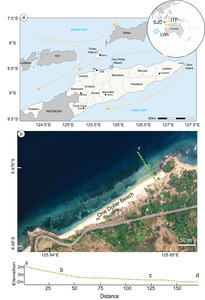
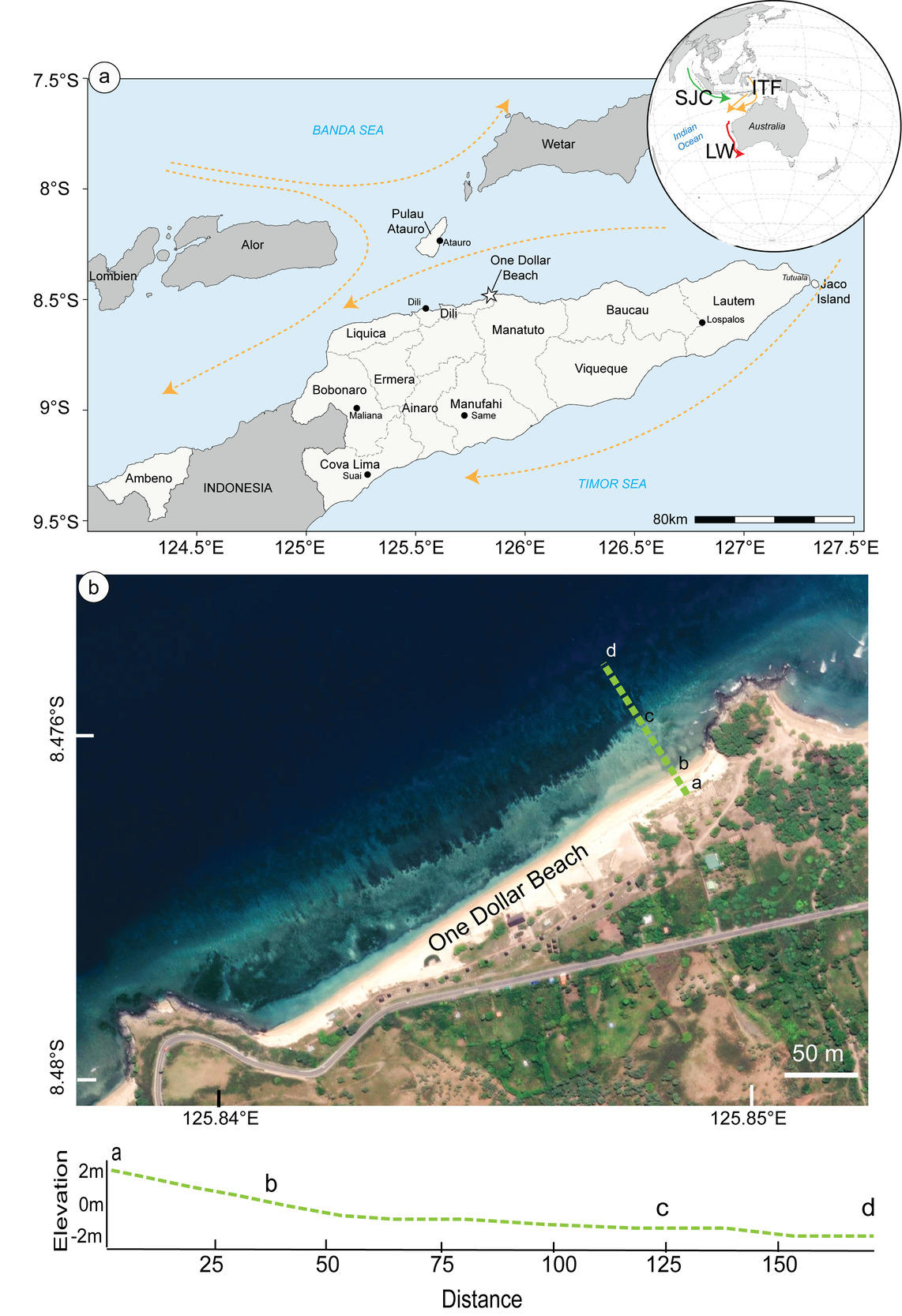
The aim of this study is to (i) identify the major foraminiferal components of the orange sand beaches on the mid-north coast of Timor-Leste and the origin of the colour of the sand, (ii) for species responsible for the beach colour, document their microhabitats in intertidal and subtidal environments adjacent the beaches on the mid-north coast of Timor-Leste, and (iii) make a preliminary assessment of the environmental drivers that may be influencing their distributions. Here we present an initial survey of the dominant species present in the beach sediment and their living microhabitats on the adjacent reef flats primarily at One Dollar Beach, about 18 km east of Hera Bay, with some additional observations and comparisons from beaches, tidal and sub-tidal environments between Dili and One Dollar Beach (Fig. 1).
GEOGRAPHIC BACKGROUND
Coastal settings
Timor-Leste occupies the eastern half of the island of Timor, situated at approximately 8°–10°S and 124°–127°E on the northwestern margin of the Australian continent (Fig. 1). It is bounded to the north by the Banda Sea and Wetar Strait, to the south by the Timor Sea, and shares a land border with Indonesian West Timor to the west. Timor-Leste also encompasses offshore islands including Atauro Island (~25 km north of Dili), Jaco Island at the eastern tip, and the Oecusse enclave on the northwest coast in the Indonesian part.
One Dollar Beach (~8.48°S, 125.85°E; Fig. 1a) is located on the north coast of Timor-Leste within the Suco of Uma Caduac, Manatuto Municipality, approximately 38 km east-northeast of the capital, Dili, and roughly midway between Dili and the regional centre of Manatuto. The beach occupies a low-lying coastal embayment (approximately 780 m long, Fig. 1b) on the edge of steep interior ranges that descend abruptly toward the coast, leaving only a restricted coastal plain. On this plain there is limited flat ground available for fluvial or aeolian sediment accumulation. For the locals, the northern sea of Timor-Leste is known as Tasi feto (female sea), which is characterized by relatively calm wave conditions, while the southern sea, referred to as Tasi mane (male sea), experiences stronger and heavier wave conditions.
Climate settings
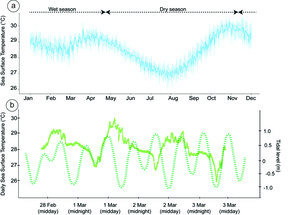
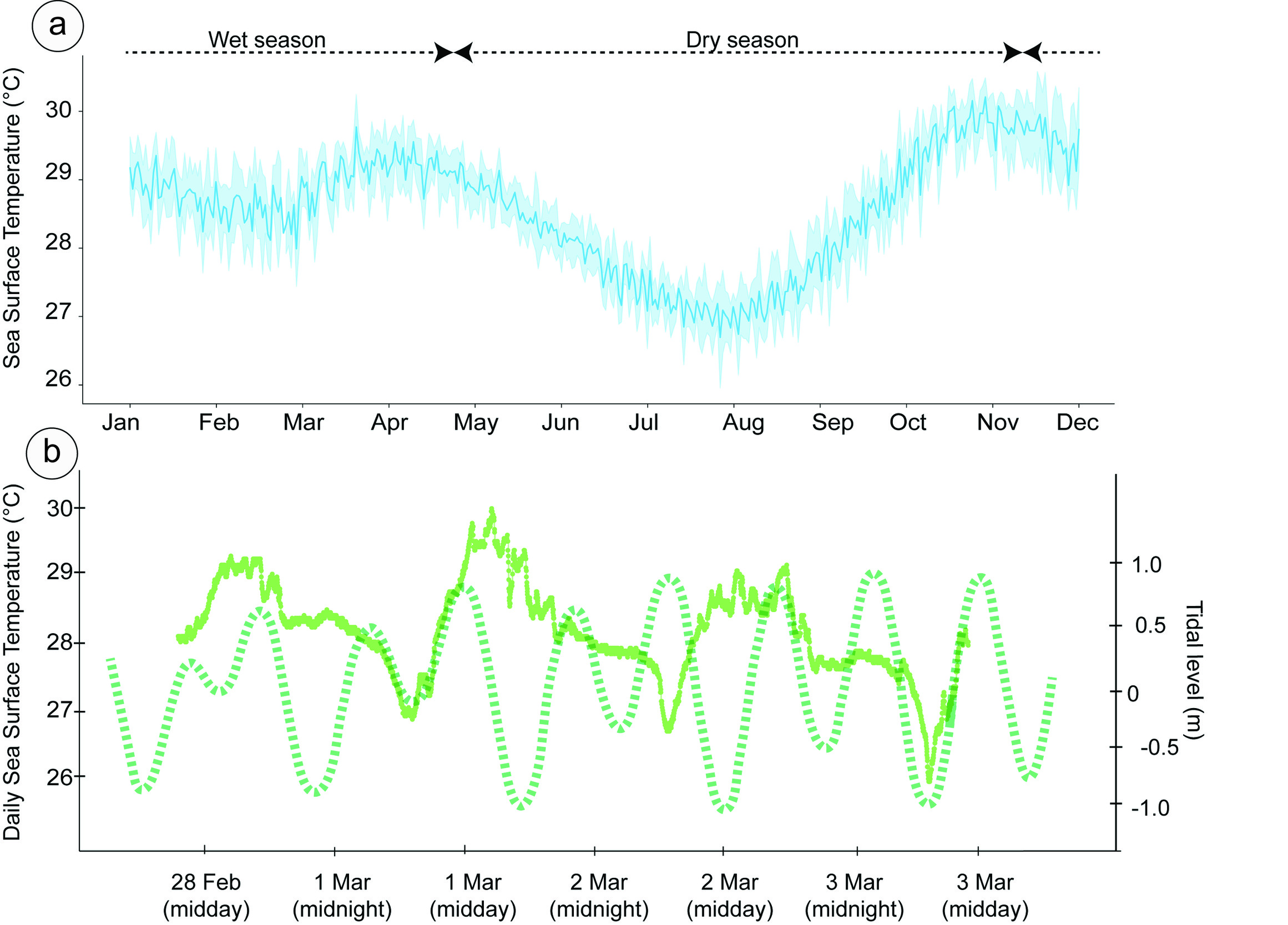
Timor-Leste experiences a monsoon climate governed by the seasonal migration of the Inter-Tropical Convergence Zone (ITCZ; Gordon 2005; Edyvane et al. 2024; Belo et al. 2026). Two dominant seasons define the annual cycle including (i) a hot wet season from December to March driven by the northwest monsoon, and (ii) a hot dry season from June to October associated with the southeast monsoon (Fig. 2a).
At the regional scale, the north coast precipitation is substantially lower than on the south coast due to the rain shadow effect imposed by the Inner Banda Arc (Barnett et al. 2007; Edyvane et al. 2024). Rainfall is concentrated in the wet season but is inherently fluctuating; droughts recur at approximately three-to-four-year intervals and are further compounded by El Niño–Southern Oscillation (ENSO) forcing, which delays monsoon onset and suppresses total seasonal precipitation. In contrast, La Niña conditions are associated with enhanced rainfall and increased river discharge across the island (Barnett et al. 2007).
At One Dollar Beach and along the coast to the east to Manatuto these regional patterns are expressed in a strongly seasonal hydrological regime, generally characterised by episodic high-intensity rainfall over the Manatuto highlands. Sea surface temperature in the One Dollar Beach region follows a strong seasonal cycle with mean annual temperatures ranging from 26.5°C during the southeast monsoon (July-August) to peak values of 29.5-30°C during the transitional periods of April-May and October-November (Fig. 2a).
Oceanographic setting
Indonesian Throughflow
Timor is influenced by the Indonesian Throughflow (ITF, Fig. 1), a large-scale inter-ocean current driven by a pressure gradient generated by wind-forced accumulation of warm, low-salinity water in the western Pacific (Godfrey 1996; Kuhnt et al. 2004). This water mass is transported westward through the Indonesian Archipelago toward the cooler, more saline eastern Indian Ocean via a series of straits and deep-water passages (Godfrey 1996; Gordon and Fine 1996; Sprintall et al. 2000, Alongli et al. 2013).
The ITF (Fig. 1) exits the Indonesian seas through two principal pathways flanking Timor: the Wetar and Ombai Straits to the north, which together form a deep (>3000 m) but narrow channel system, and the broader but slightly shallower Timor Trough to the south (Kuhnt et al. 2004; Sprintall et al. 2000). Of relevance to the present study, the north coast of Timor-Leste between Díli and Manatuto sits directly along the southern margin of the Wetar Strait, where the deep throughflow waters meet against a narrow fringing shelf and generates strong alongshore currents and periodic upwelling that characterise this coastline. ITF transport through these passages varies across multiple timescales, driven at intra-seasonal scales by monsoonal forcing (Godfrey 1996; Waworuntu et al. 2000; Sprintall et al. 2000), with peak influx during the northwest monsoon (November–February) and peak outflux during the southeast monsoon (July–September).
Tides and waves
The tidal regime along the north coast is microtidal to mesotidal, with spring tidal ranges of 1.5–3 m and neap tidal ranges of 0.3–1 m (Fig. 2b). Strong tidal currents in this sector are attributed to the funnelling of the ITF through the narrow deep-water channels of the Wetar Strait (Sprintall et al. 2000). Swell refraction and reflection around Atauro Island (~25 km to the north-northwest) generates a cross-swell interference pattern in the offshore zone. From observations during the present study, wave heights are attenuated progressively across the fringing reef, from maxima of approximately 1 m at the seaward reef crest to ~0.5 m over the mid-reef and further reduced to ~0.2 m within the sheltered back-reef lagoon environments.
MATERIAL AND METHODS
The objective of this explorative survey was to understand the composition and origin of the foraminiferal-dominated orange sand on One Dollar Beach, and the foraminifera contributing to the beach sand that live in the nearshore parts of the adjacent reef flat forming a very shallow back-reef lagoon partly exposed at low tide. The fieldwork was carried over one week from 28th February to 4th of March 2026. To get an overall picture of the area, sediment as well as coral rubble, and seagrass shoots were randomly sampled in small quantities (around 200 grams of wet sediments) in the lagoon in front of One Dollar Beach (Fig. 1b). Samples were collected from an array of living microhabitats in the intertidal and subtidal zone in front of the beach. A temperature sensor HOBO recorded temperature fluctuations at one-hour intervals across the four days of the study. The sensor was placed attached to a metal picket in ~2m water depth (at high tide level) in the middle of the lagoon.
Representative sand samples from the beach and the immediate subtidal reef platform adjacent the beach on its eastern side were separated into < 1mm, 1–2 mm, and > 2 mm grain-size fractions. These were weighed and the proportion of each grain-size category was determined as weight %. The abundance % of sediment grains in each fraction was determined by systematic grain counts (n = >100 were possible) on a gridded tray. Due to abrasion, coral fragments, mollusc fragments, Halimeda flakes, and coralline algae could not always be reliably distinguished from one another, particularly in the finer sediment fraction, and were therefore classified together as non-foraminiferal biogenic carbonate.
Other samples were stored in collecting vials filled with seawater and placed in insulated containers. To better understand behaviour and functions of the morphological features displayed by the dominant foraminiferal species, immediately after collecting the samples were examined and living specimens were observed under a stereomicroscope. Sand residues were subsequently dried in an oven at 60°C overnight. From non-sieved samples, calcarinids and other benthic foraminifera were carefully picked with a sable-hair brush 3/0 to avoid damaging or crushing the specimens and mounted on micropalaeontological cardboard slides. Successive reflected light micrographs as well as embedded araldite sections were taken at different focus heights under a biological compound microscope and repeated for each required orientation. The resulting images were stacked and rendered using Helicon SoftFocus software (Helicon Soft). Living calcarinids were also collected for a molecular study the results of which will be reported separately.
To obtain a preliminary overview of the significance of what is observed at One Dollar Beach, an explorative survey and visual estimation of the abundance of the One Dollar Beach dominant species was expanded across the 75 km of coastline separating Sandy Bottom (near Dili) in the West to Manatuto in the East (Fig. 1).
OBSERVATIONS
The dominant microstars
Baculogypsina sphaerulata, Schlumbergerella floresiana, and the morphologically divergent Schlumbergerella sp. all belong to the rotaliid Family Calcarinidae and are diagnosed by a complex internal morphologies involving small bubble shaped chamberlets and pore-like apertures (Loeblich & Tappan 1987, Hottinger et al. 1991, Holzmann & Pawlowski 2017). Other genera now placed in Family Calcarinidae by Holzmann and Pawlowski (2017) have less complex chamber arrangements and a high narrow interiomarginal aperture with a free-edged tooth plate (e.g. Subfamily Pararotaliinae). Baculogypsina and Sclumbergerella share a fundamentally similar architectural logic: a calcareous, perforate test built around a trochospiral to almost planispiral embryonic stage from which a network of successive small bubble-shaped lateral chamberlets expand outward. Despite the overall shared morphology, the different taxa diverge sharply in test outline, ornamentation, and the presence or absence of internal canal systems leading out to a stellate or lobate spinal outline. The orange test colour, shared by both species, may relate to the colour of endosymbiotic diatoms (Hallock 1999; Hyams-Kaphzan and Lee 2008; Prazeres and Renema 2019) or to the colour of the inner organic lining of chambers and the organic matrix in the test wall (chemically analysed for S. floresiana by Sabbatini et al. 2014 but not associated with test colour in their study).
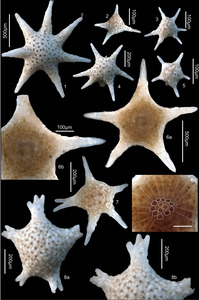
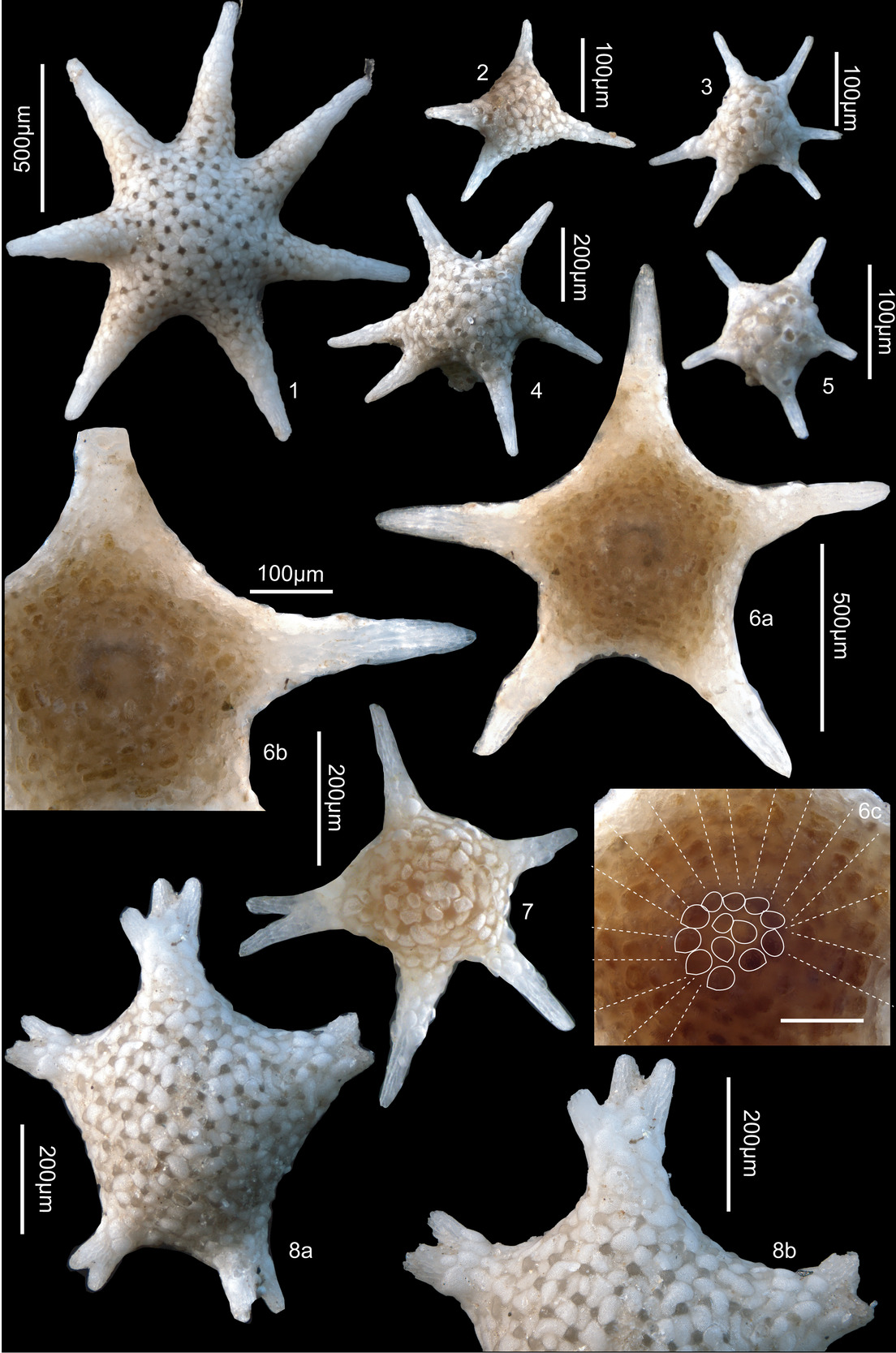
Baculogypsina sphaerulata (Parker and Jones 1860) is the most distinctive of the three calcarinids considered in this study. Its test is biconvex and lenticular, with a strongly stellate outline produced by four to eight slender, tapering radial spines that arise from the periphery of the central disc and can nearly double the total test diameter in fully adult specimens (Fig. 3). These spines are structurally integrated into the test through a system of fine anastomosing radial canals connecting back to a main internal spiral canal (Figs 3.6a,b, 3.7). The test surface carries a dense cover of imperforate pustular pillars between the chamberlet rows, producing a regular cobblestone-like texture (Figs. 3.8a,b) obscured by stronger ornament in Schlumbergerella Hanzawa (1952). The test surface of smaller individuals is smoother and more translucent. Ontogenetic change in this species is particularly pronounced: juvenile individuals (Figs. 3.2, 3.3, 3.5) are compact and can superficially resemble small Calcarina d’Orbigny (1826), while fully adult tests (Figs. 3.1, 3.6a) achieve the stellate, more heavily ornamented form that defines the species.
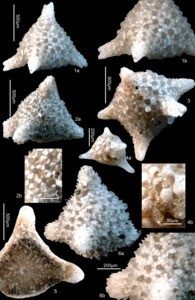
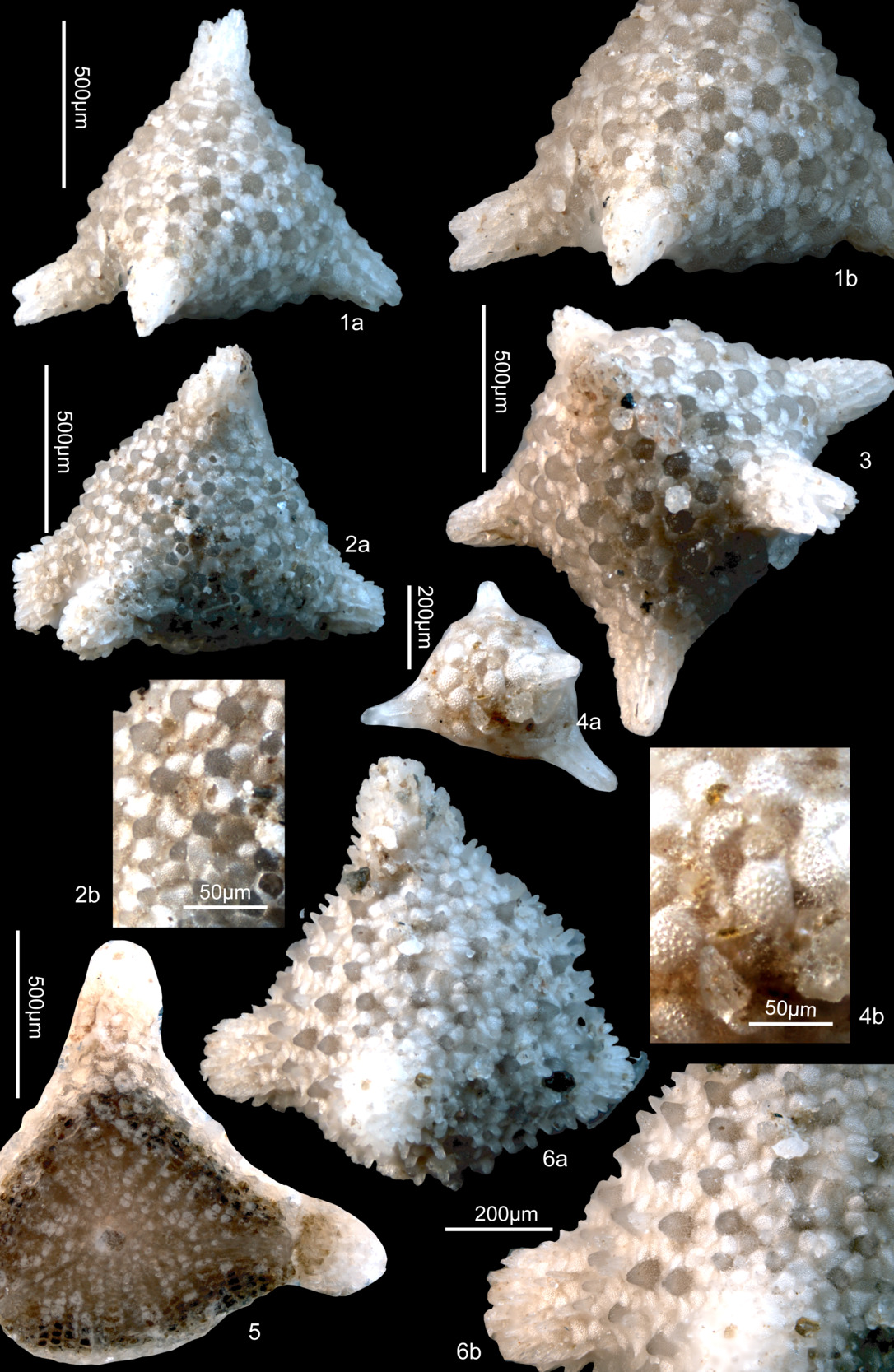
Schlumbergerella floresiana (Schlumberger 1896), by contrast, abandons the fine stellate habit entirely in favour of a large, globular to broadly triangular or weakly tetrahedral test whose 3–4 short broad spinose lobes give it the characteristic tricorn profile (Fig. 4). The wall is coarsely perforate and at later growth stages the test becomes encrusted with massive solid crystalline pillars interspersed between the chamberlet rows. The lobate spines lack internal canals entirely, and the radial canal system itself is greatly reduced in Schlumbergerella relative to Baculogypsina and Calcarina.
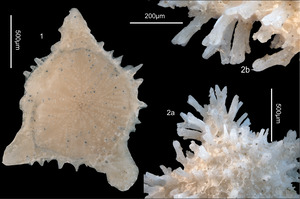
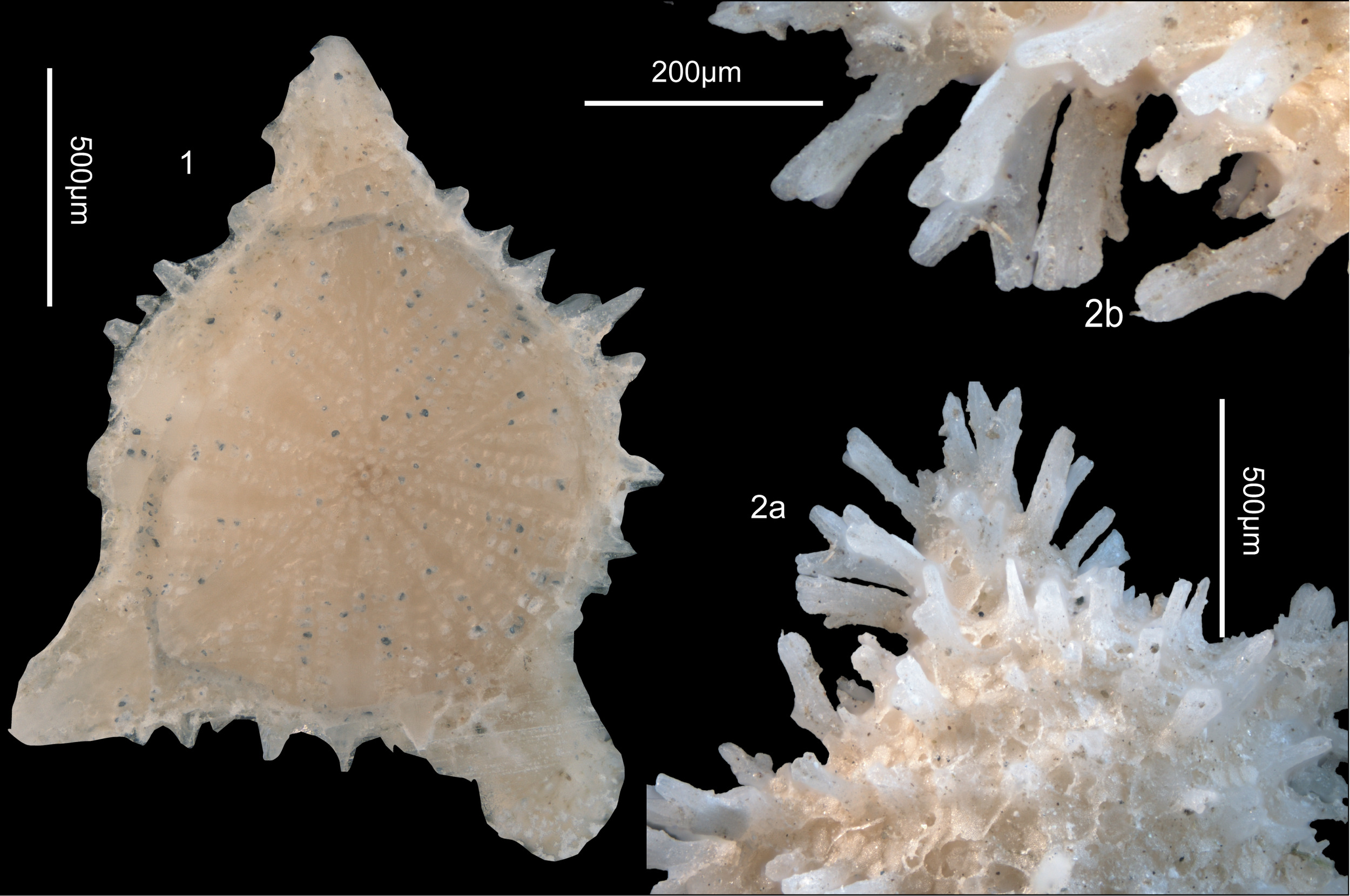
The rare morphotype Schlumbergerella sp. (Fig. 5) sits in an intriguing relationship to both of the above. Schlumbergerella has a more broadly triangular, shield-like outline and radial internal organisation (Fig. 5.1). The species is characterized by the presence of a regular fringe of short, sharp denticulate peripheral teeth-like spines that are not observed in S. floresiana. Most striking, however, are the arborescent crystalline extensions documented in Figs. 5.2a,b. These slender calcareous branches arising from the periphery of the test, divide repeatedly into finer, distally projecting terminations, forming a dendritic spray of exceptional structural complexity at about 200 µm scale. These extensions are unlike the blunt ornamental pillars of S. floresiana, unlike the hollow spines of Baculogypsina, and unlike anything reported from the Calcarinidae more broadly. These are probably secondary additonal ornament and may not include a proper canal system. However, the smooth appearance of the spines is reminiscent of the spines in Neorotalia leeuwinensis (see, Tremblin et al. 2025). Whether this branching spine morphology represents intraspecific variation, a ecophenotypic response to local hydrodynamic conditions, a projection of secondary pseudopodia, or a defence mechanism against predators warrants further investigation.
Molecular studies are currently underway on many of the calcarinids species. Several studies have investigated the broad genetic signature across the Indo-Pacific (e.g. see Tremblin et al. 2025, fig. 18). However futher exploration will be of great importance in understanding the cryptic diversity among specimens but also different morphotypes, especially in Timor-Leste, currently missing fundamental genetic work.
One Dollar Beach
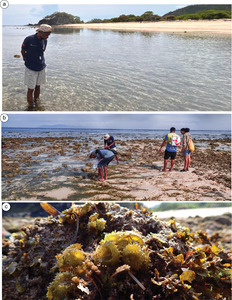
One Dollar Beach is about 766 m long with an intertidal foreshore that varies from about 80 to 100 m wide (Figs. 1, 6). The beach profile gently slopes to a reef flat, with the area landward of the beach extensively modified as a park (Fig. 1b). Between 28 February to 3 March 2026, sea-surface temperatures measured by a HOBO sensor employed during this study, fluctuated between about 26°C and 29°C (Fig. 2b). The tidal range at Dili for the same period varied from lows of -1.0 m to highs of 1.0 m and was semi-diurnal (Fig. 2b).
_view_west_along_the_coastline_towards_hera_.tif)
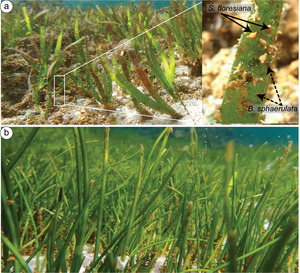
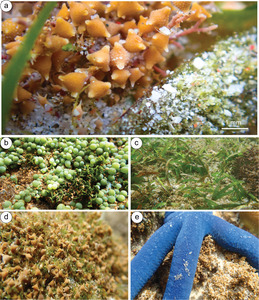
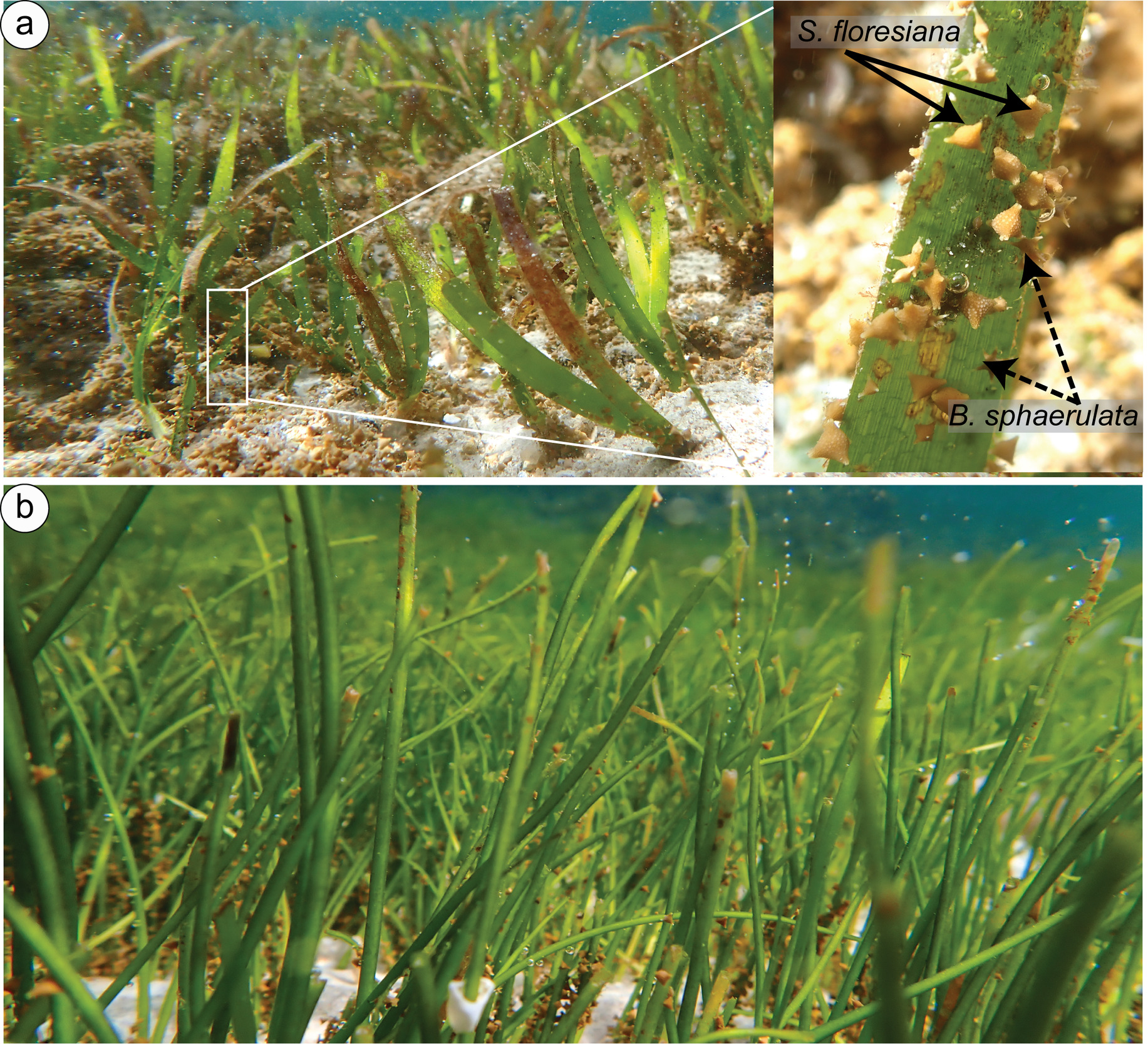
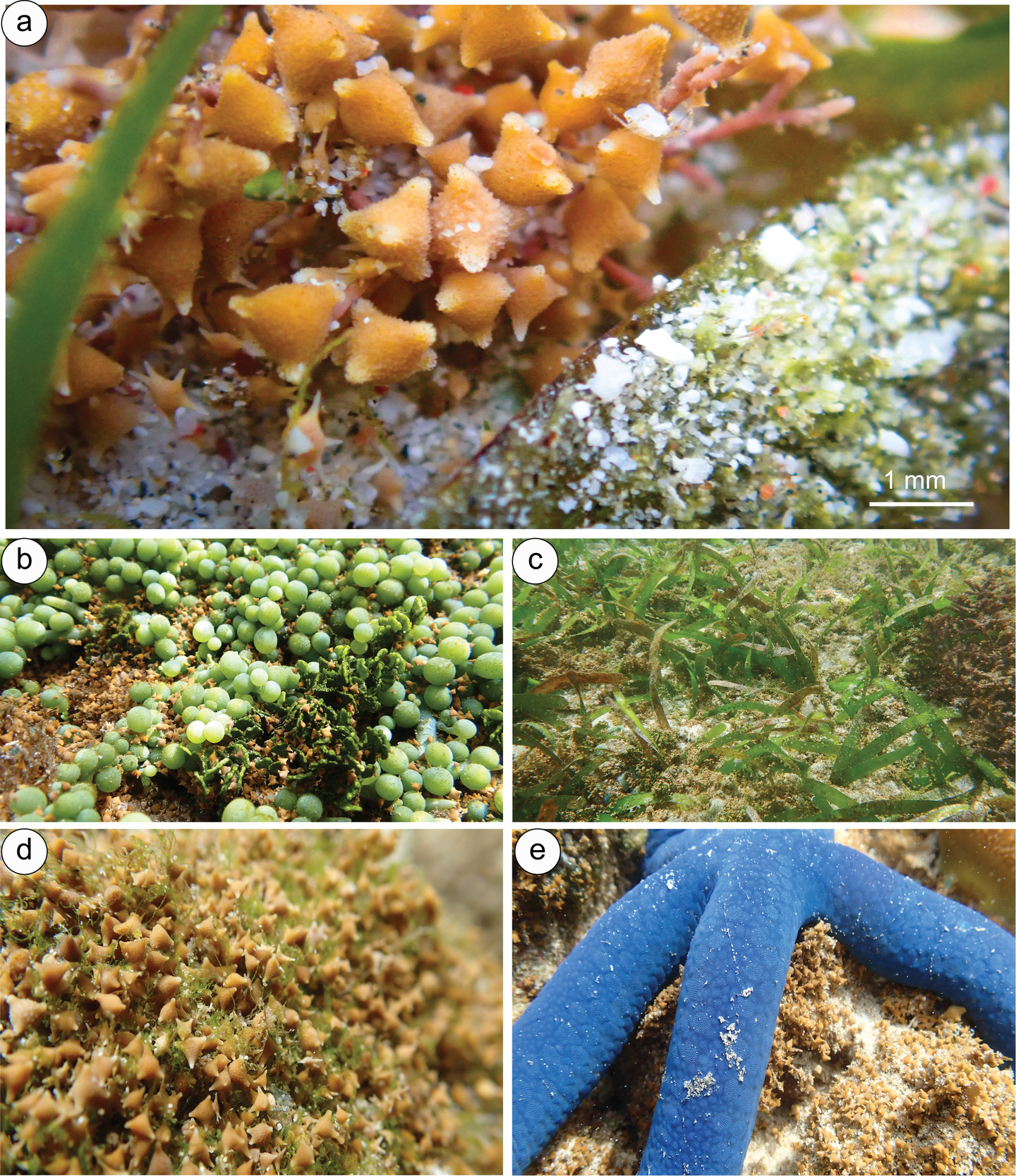
Most of the beach foreshore is covered by the coarse orange sand (1–2 mm grain-size fraction) composed mainly of the tests of the larger foraminifera Schlumbergerella floresiana (Fig. 6). Although many of the tests are abraded, they show remnants of a star-like morphology (Fig. 6c). The lower foreshore merges into a flat rocky platform which is sand covered in most areas (Fig. 7). The platform is densely covered by seagrass Thallasia hemprichii and Syringodium isoetifolium as well as low macrophytes (e.g. Turbinaria ornata) with patches of filamentous algae. In a zone adjacent the beach these come partly out of water during the lowest tides. Some of the macrophyte thalli, filamentous algae and the seagrass are densely covered with living representatives of Schlumbergerella whose tests form the main part of the beach sediment (Figs. 8, 9). These were not observed living on the mobile sand patches adjacent the microhabitats.
Grain-size and sediment grain composition of representative samples (5 from the beach and 4 from subtidal areas between patches of algae and seagrass) are shown on Tables 1, 2, 3. Across the five beach samples, Schlumbergerella floresiana consistently dominated the 1–2 mm fraction, ranging from 62% to 75% (Table 2). This contrasted sharply with the <1 mm and >2 mm fractions of the same samples, which were instead composed mostly of non-foraminiferal biogenic carbonate (mostly heavily abraded coral and mollucs fragments), accounting for 62% to 94% of grains counted. Other benthic foraminifera (e.g. Homotrema sp., Elphidium sp., Neorotalia sp. cf. calcar) made only a minor contribution to beach samples, typically below 10% and are often absent altogether, while metamorphic grains were essentially negligible, appearing in trace amounts in only one sample (Sample 4).
A broadly similar pattern emerged in three of the sub-tidal samples (46, 47, 52), where Schlumbergerella again dominated the 1-2 mm fraction, reaching between 67% and 96% of the grain count (Table 3). In these samples, the <1 mm and >2 mm fractions were again dominated by non-foraminiferal carbonate, mirroring the beach pattern closely. Some however, departed markedly from this trend, Baculogypsina sphaerulata rather than Schlumbergerella was the dominant taxon, reaching 82% in the 1-2 mm fraction of sample 50, with Schlumbergerella reduced to a minor component in this sample. Grain size distributions were more variable among the sub-tidal samples than the beach samples (Table 1), with samples 46 and 47 in particular containing higher proportion of coarse (>2 mm) material than any beach sample, while samples 50, and 52 were more comparable in coarse-fraction content to the beach.
Additional observations on adjacent beaches
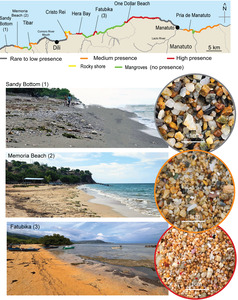
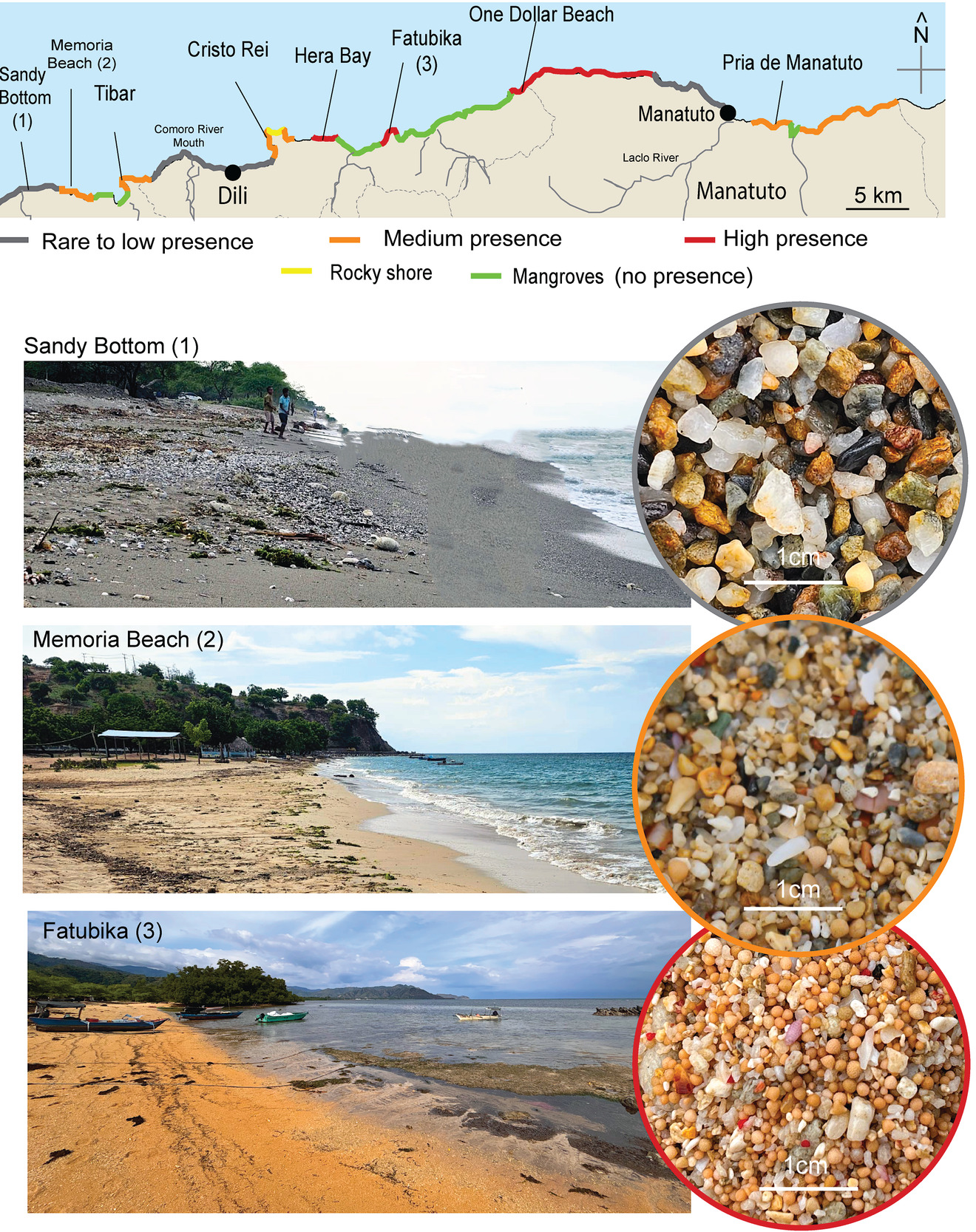
Based on visual reconnaissance and some sampling of beach foreshore areas from Sandy Bottom in the West to Pria de Manatuto in the East during March 2026 (Fig. 10), the abundance of orange Schlumbergerella similar to that found on One Dollar Beach varied considerably along the coastline, with a similar high percentage cover to One Dollar Beach found at Fatubika (>70%), a sheltered sandy shore characterised by well-sorted foraminiferal sediment dominated by calcarinid tests (Fig. 10), and on a beach in Hera Bay (Fig. 10). Medium presence of Schlumbergerella was recorded at Memoria Beach (Fig. 10), where coarser mixed carbonate-siliciclastic sediments were more dominant. Sites such as Sandy Bottom yielded only rare to low presence of Schlumbergerella, with sand composed mainly of lithogenic (metamorphic) grains and minor mollusc shell fragments (Fig. 10). The input of the lithogenic grains is due to riverine discharge, particularly during flood events in the wet season.
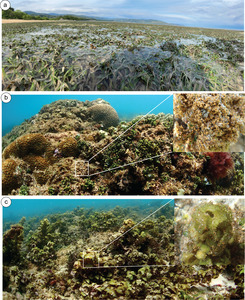
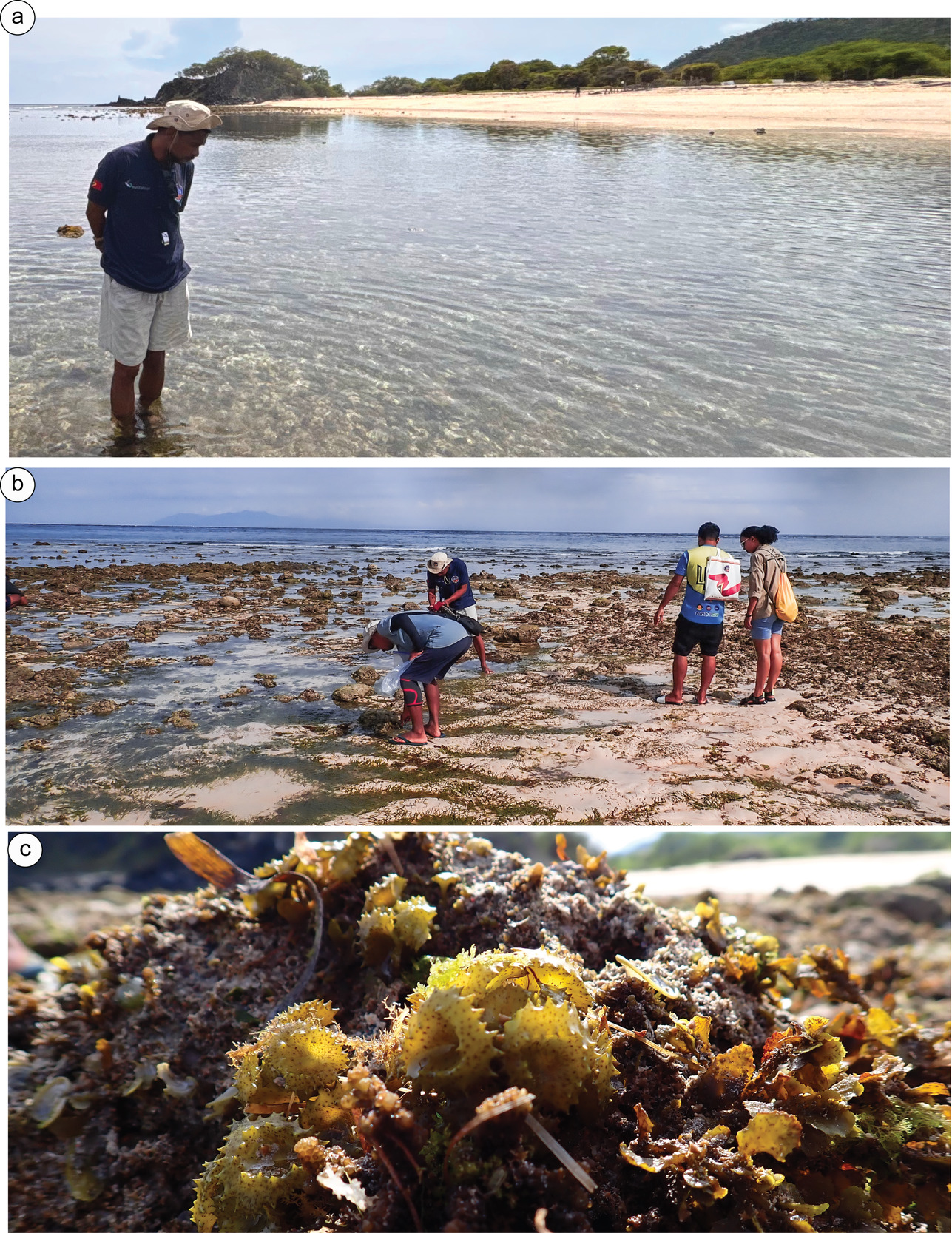
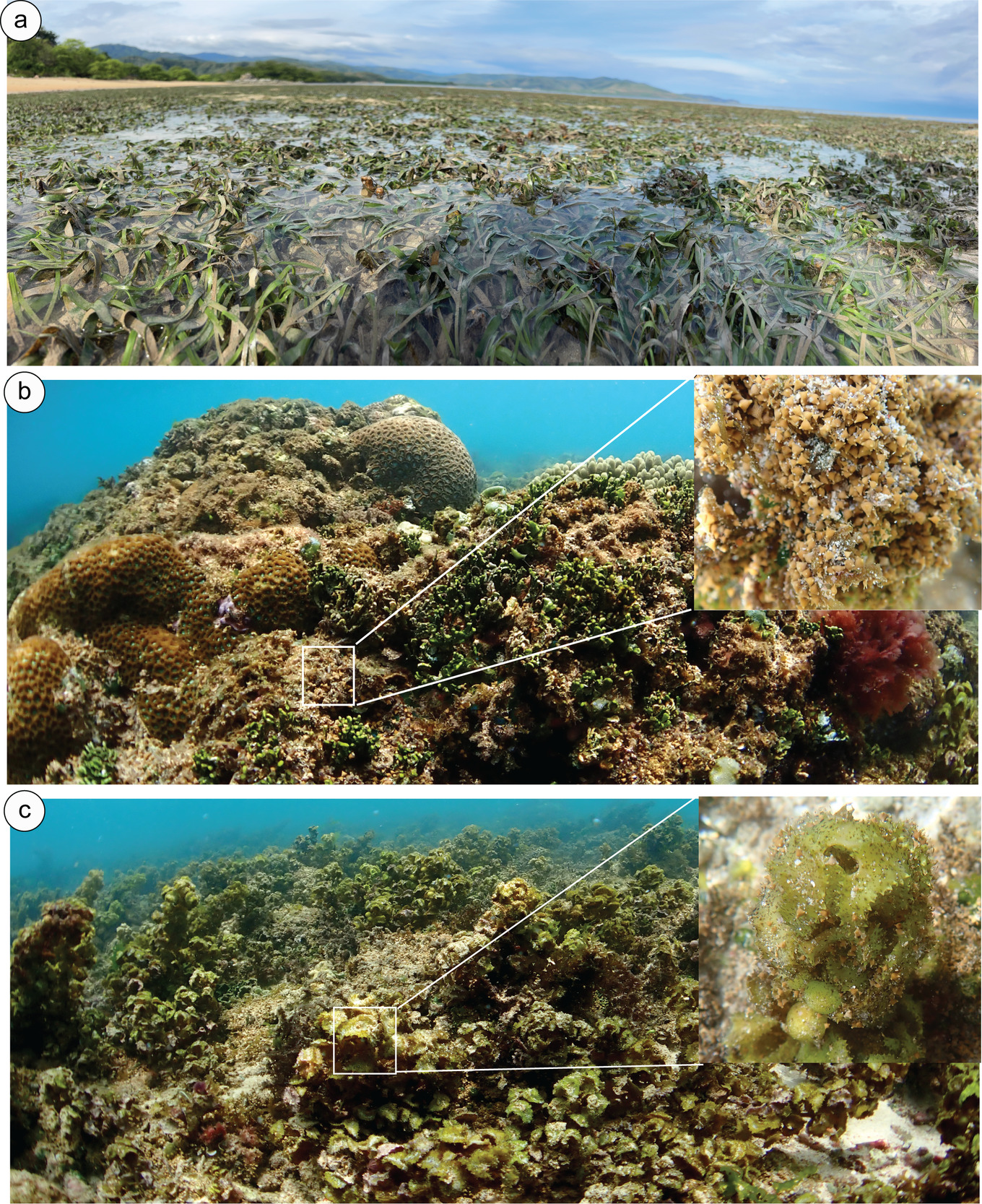
On the reef flats in the shallow lagoons offshore the orange beaches at Fatubika and at Hera Bay, similar microhabitats to those observed at One Dollar Beach were observed. These include dense seagrass meadows of Thallasia hemprichii (see Fatubika example, Fig. 11a) and small coral buildups exposed at low tide (Fig. 11b) and Turbinaria stands (Fig. 11c).
DISCUSSION
Indo-Pacific biogeographic distribution of Schlumbergerella floresina and Baculogypsina sphaerulata
Modern symbiont-bearing larger foraminifera are largely confined to tropical and subtropical shallow-water habitats between 30°N and 30°S, with their minimum environmental temperatures limits governed by the 14–20°C isotherms (Figure 12). At the global scale, based on the records of Förderer et al. (2018; 2023) and on examination of samples from the western Australian continental margin held in the Foraminiferal Collection of the Earth Science Museum at the University of Western Australia, Baculogypsina sphaerulata and Schlumbergerella floresiana share a broadly overlapping Indo-Pacific distribution. Baculogypsina sphaerulata is the more widespread of the two, occurring across reef-flat environments from the western Pacific to the eastern Indian Ocean, with records from Guam, the Ryukyu Islands, Tuvalu, the Great Barrier Reef, and the Coral Triangle (Förderer et al. 2018). Schlumbergerella floresiana, by contrast, achieves its greatest presence in the reef systems of Bali and the surrounding islands (Fig. 12), and three of the most abundant calcarinid species from Bali, including S. floresiana, have not been recorded at otherwise comparable sites such as Cebu or the Spermonde Archipelago (Renema et al. 2001), pointing to a degree of regional endemism within this part of the Indo-Pacific.
Both genera extend southward into the Timor Sea and across the Sahul Platform, with occurrences documented at Ashmore Reef, Sahul Shoals and Rowley Shoals (Loeblich & Tappan 1994; Tremblin et al. 2025 based on unpublished UWA data), but neither extend beyond approximately 20°S along the Western Australian margin. This southern limit corresponds closely to the point at which sea surface temperatures fall below the threshold tolerances of their diatom endosymbionts (optimum temperature for net photosynthesis (Topt) peak at 30.3°C based on Fujita et al. 2014). The dominance of Schlumbergerella floresiana across the Balinese reef systems, in preference to genera such as Neorotalia and Pararotalia that characterise the microtidal to mesotidal environments of the Western Australian coast (Tremblin et al. 2025), is therefore most plausibly attributed to tidal regime and associated oceanographic conditions, which appear to be the primary controls on distribution in this region rather than temperature alone.
The range of substrates of S. floresiana and B. sphaerulata observed at One Dollar Beach contrasts with findings from comparable reef systems elsewhere in the Indo-Pacific (Renema 2003, Fujita et al. 2014). Renema (2003) documented a strong preference for coralline algae-encrusted rubble on reef slopes along the Balinese coast, with abundance declining markedly on sandy or mixed carbonate substrates. The absence of selectivity in living habitats at One Dollar Beach may reflect reduced interspecific competition for space and resources from other LBF taxa present in the area, but requires further investigation.
_gl.tif)
Distribution of Schlumbergerella and Baculogypsina along the north Timor-Leste coast
The distribution pattern observed here broadly mirrors that documented along other Indo-Pacific coastlines, where calcarinid abundance is strongly governed by suitable firm substrate habitats (Renema 2003; Förderer et al. 2018; Tremblin et al. 2025). Hohenegger (2006) noted that living calcarinids were absent from mobile sand substrates in the Indo-Pacific region. At One Dollar Beach, dead Schlumbergerella tests make up a large share of grains in both beach and sub-tidal samples, especially in the 1–2 mm fraction. This shows that its test form with a complex array of internal chamberlets adding architectural strength, survives the shift from the microhabitats on the very shallow reef flat where it is a prolific part of the reef community, to death assemblages making up the subtidal sand and eventually coarse sand (1-2 mm fraction) on the beach. The abraded orange tests of Schlumbergerella are responsible for the beach colour. Baculogypsina sphaerulata showed the opposite pattern: it dominated some sub-tidal sand but made up 0% of every coarse sand fraction on the beach. Given how abundant B. sphaerulata is in a subtidal sample, this complete absence in the coarse sand suggests that its tests may break apart under the higher abrasion of the beach environment. Perhaps its non-diagnostic test fragments were counted among the non-foraminiferal biogenic carbonate grains in the < 1mm fraction on the beach. This points to a compositional bias driven by test durability rather than a true difference in habitat. Schlumbergerella retains its identity in sediment composition across both environments, while Baculogypsina may lose its compositional signature once exposed to the beach, even where it contributes substantially offshore.
The conspicuous presence of calcarinid tests on beaches at One Dollar Beach and Fatubika (Fig. 10) is consistent with the preference of both B. sphaerulata and S. floresiana for low, well-lit reef flat and sandy shore environments elsewhere (Hallock 1981; Fujita et al. 2016). At One Dollar Beach, we found both species are very conspicuous in an array of living microhabitats. It emphasises that, as opposed to some taxa with mainly a mono-specific living habitat (e.g Neorotalia leeuwinensis on Amphiroa gracillis, Tremblin et al. 2025), both taxa are opportunistic in their living mode with no preferred habitat other than a firm substrate. It also illustrates their flexibility and high mobility in microhabitat selection. Living specimens of both Baculogypsina sphaerulata and Schlumbergerella floresiana (collectively named “Raihenek Fitun” in Tetum, Timor’s lingua franca) observed at One Dollar Beach, were found co-occurring, often in dense populations, across a notably broad range of shallow-water microhabitats within the same reef setting (Fig. 4–6). On seagrass blades (Du’ut Tasi), individuals of both taxa were observed clinging to the vertical leaf surfaces of Thalassia hemprichii and Syringodium isoetifolium , their tests pressed flat against the flat leaf and tubular structure in S. isoetifolium in a posture that maximises light capture for their algal endosymbionts. This is a living strategy more common in peneroplids and vertebralinids (Tremblin et al. 2022) than in calcarinids. At One Dollar Beach, both species were also found on small coral buildups, some with associated Halimeda sp., in amongst filamentous algal, and on algal macrophytes. From the broader survey along the coast, a similar broad array of habitats was found to host both Schlumbergerella and Baculogypsina. It is clear from these observations, that there is no preference for a single host. The life requirement seems to be firm substrates in very shallow water with maximum light exposure for the endosymbionts (diatoms according to Prazeres and Renema 2019). Schlumbergerella and Baculogypsina are not permanently or temporarily cemented to the host substrate. Under adverse conditions, including daily low tides, they probably have the ability to move quickly using pseudopodia emanating from spines.
Future research priorities and conclusions
This study represents an exploratory investigation rather than a definitive account, and considerable work remains before the ecology of Schlumbergerella floresiana and Baculogypsina sphaerulata along this coastline is properly understood. Much is still unknown about how these species respond to key environmental factors. Temperature is likely to be an important control, since symbiont-bearing foraminifera are known to be sensitive to thermal stress in other reef settings, and understanding how S. floresiana and B. sphaerulata tolerate seasonal or site-level temperature variation would help clarify why densities differ so markedly between sites. Light availability is similarly important given the species’ reliance on photosynthetic endosymbionts, and quantifying light attenuation across sheltered versus exposed sites would help test the hypothesis proposed here more directly. Other variables, including current velocity, sediment transport and retention, and salinity change (for periods during the wet season) may also interact with these factors in ways that site-level comparisons alone cannot resolve, and would benefit from concurrent, quantitative measurement alongside biological sampling.
Experimental work on the reproductive biology of both species would also be valuable. Currently nothing is known about the reproductive cycle, generation time, or population turnover of Schlumbergerella and Baculogypsina in Timor-Leste, yet these traits directly determine how quickly populations can recover from disturbance and how much carbonate they can produce over a given period. Establishing this would move the present findings from a snapshot of standing density toward a genuine understanding of productivity.
This connects to a broader outstanding question: how much carbonate these species actually contribute to the regional sediment budget. The present survey suggests S. floresiana and B. sphaerulata may be locally significant producers, potentially comparable to levels reported elsewhere in the Indo-Pacific, but a robust estimate would require systematic quantification of standing stock, calcification rate, and turnover, incorporated into a broader carbonate budget alongside molluscs, corals and calcareous algae. This would allow the contribution of these foraminifera to be assessed with the same rigour typically applied to other reef carbonate producers and would help determine whether their omission from most existing budget frameworks has led to a meaningful underestimate of total carbonate production in these systems.
This study has shown that Schlumbergerella and to a lesser extent Baculogypsina are prolific epibionts on a range of mainly algal and seagrass microhabitats on very shallow-water intertidal and subtidal reef flats on the north coast of Timor-Leste. These calcarinids provide a significant portion of the coarse sand (generally > 60% of the 1–2 mm grain size fraction) in the subtidal and beach areas. They give the beach a distinctive orange colour. If their microhabitats were to disappear through natural events or human interference, the character of the beach may greatly change through loss particularly of the Schlumbergerella contribution.
The present study, in making preliminary observations on the distribution, habitat associations, and ecological significance of Baculogyspina and Schlumbergerella across the northern coastline of Timor-Leste, provides a foundation for incorporating foraminiferal monitoring into national reef and coastal management strategies. Future work is still required at all biological levels in (i) understanding the thermal tolerance of these foraminifera and their microhabitats; (ii) experimenting mass culturing of living sand as done by Hosono et al. (2014), to replenish eroded areas; (iii) defining the molecular signature in identifying cryptic species diversity; and (iv) using the present described knowledge of microhabitats as analogues for interpreting the Holocene/Pleistocene terraces of older lagoonal deposits.
References cited with an asterisk (*) are listed in APPENDIX 1: GREY-LITERATURE REFERENCE.
Acknowledgments
The authors sincerely thank the staff and researchers at Instituto de Geociencias de Timor -Leste (IGTL) for their support in providing field resources and coordinating the administrative arrangements necessary for this study. All co-authors contributed to the field data collection and observations reported in this work, and their efforts in the field were essential to the study’s completion. The primary author also gratefully acknowledges the ongoing support of the Forrest Research Foundation. The paper benefited by thoughtful appraisals by Dr Lorenzo Consorti, Italy, and an anonymous reviewer.