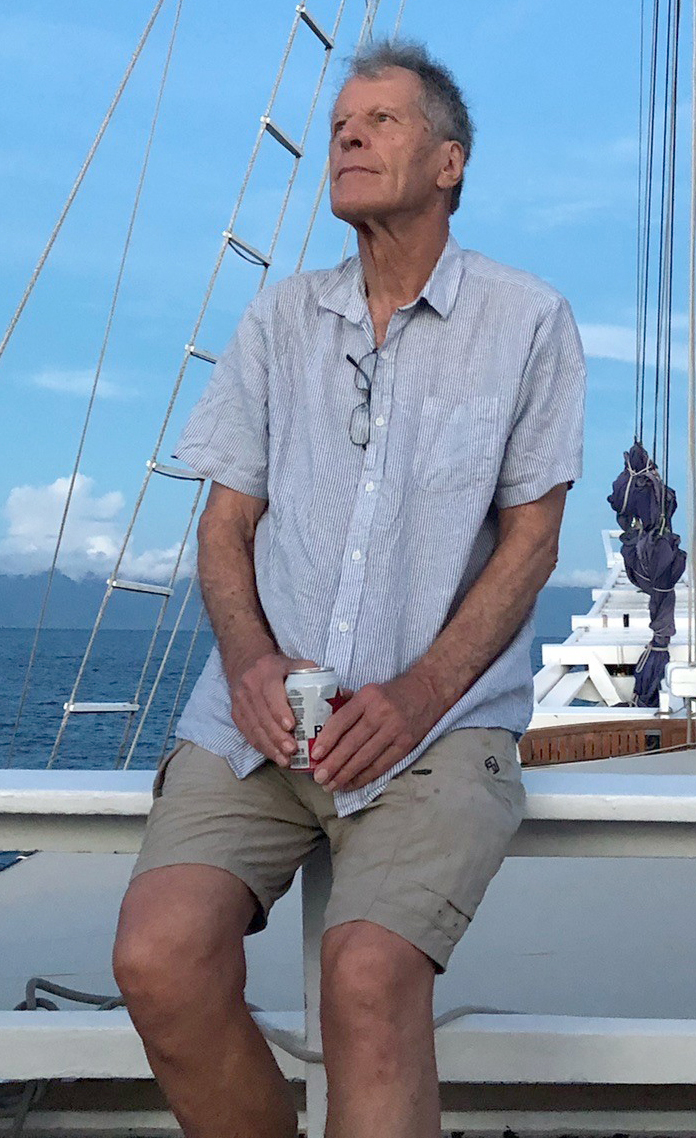
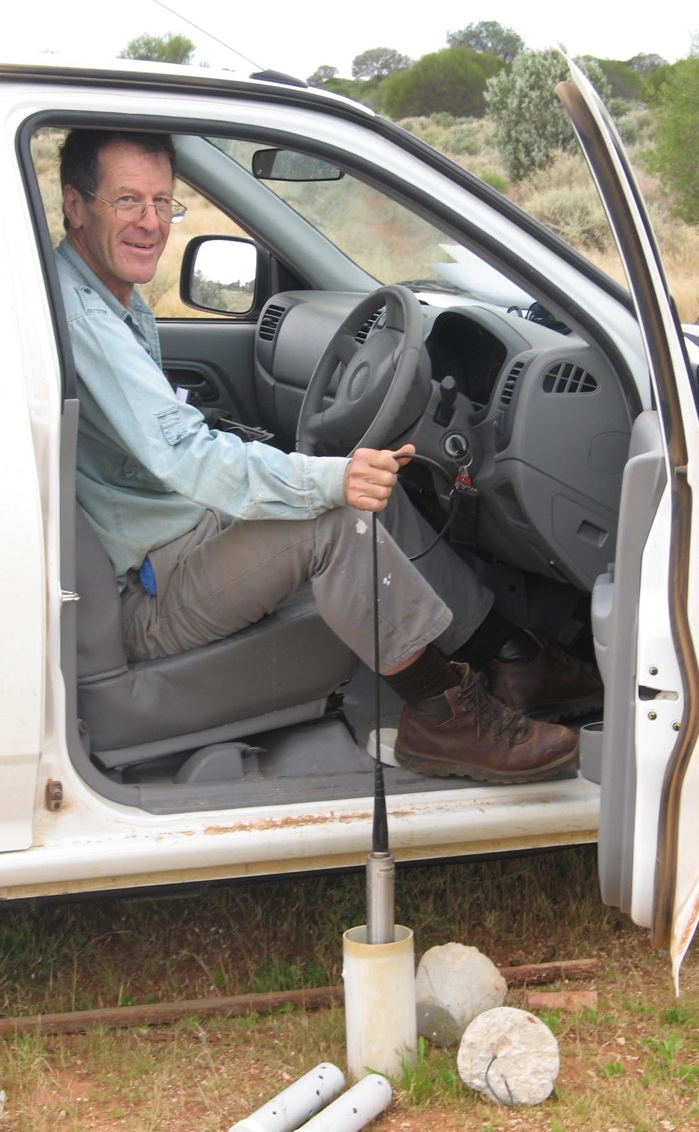
William Frank Humphreys – universally known as Bill – has left a scientific legacy that is incomparable in the modern age, spanning physiology, ecology, taxonomy, systematics, molecular phylogenetics and conservation that led to important changes to government policy.
Bill’s research interests and publications spanned marine, freshwater and terrestrial ecosystems with studies in microbiology, molluscs, echinoderms, crustaceans, arachnids, insects and marsupial and eutherian mammals. He participated in numerous oceanographic and terrestrial surveys documenting biodiversity in habitats encompassing subterranean, marine benthic soft and hard substrates as well as temperate, sub-tropical and tropical closed and open forest, savannah and steppe biomes. These studies were also geographically diverse occurring in tropical (Africa, Seychelles, Papua New Guinea, Kimberley), temperate (Europe and New South Wales), arid (Western Australia and Northern Territory) and mediterranean (Greece and southwestern Australia) climates across several continents.
Bill was born in Cheshire, United Kingdom and raised in Zimbabwe, where he spent most of his formative schooling. He was part of a large family with five siblings. Bill’s independent spirit was fostered during his childhood, and he hitchhiked alone across Africa at the age of 17. He enrolled in a Bachelor of Science at the University of Wales and graduated with Honours Magna Cum Laude in 1968. During that year he participated in an expedition organised by the Royal Society of London to Aldabra, under the leadership of Professor David R. Stoddard OBE (1937–2014), as a field assistant. This was followed by field excursions in 1969 on the University of Wales, Bangor, expedition to Watamu Marine Park, Kenya, and later into Zanzibar-Mogadishu.
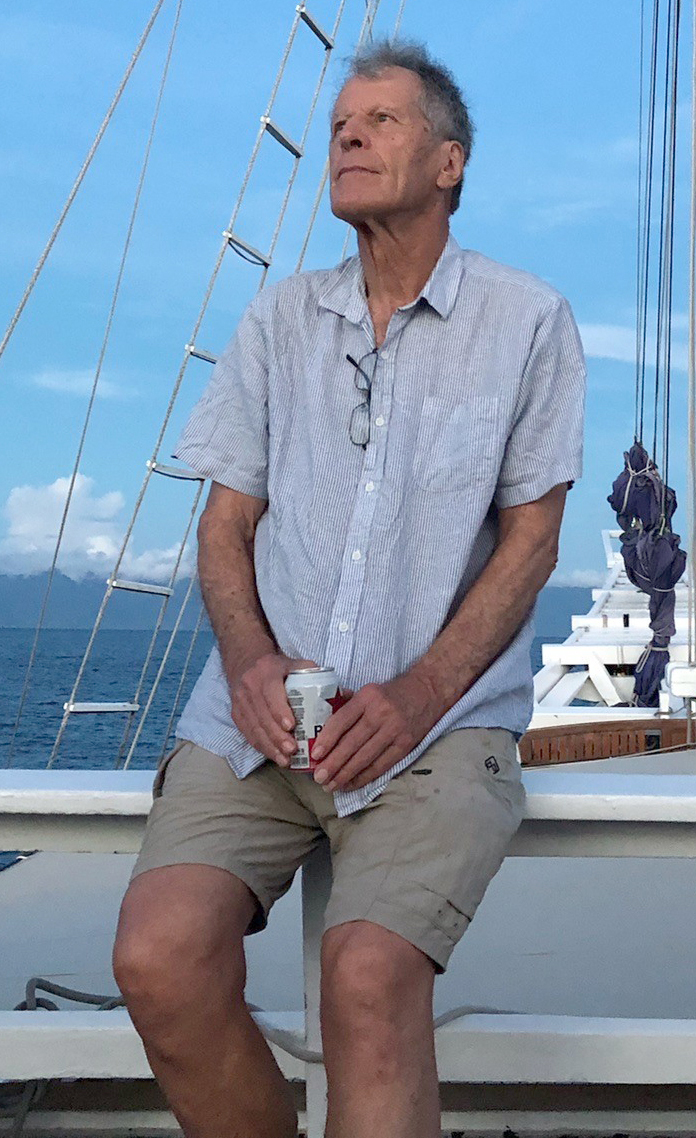
He relocated to Australia in 1969 where he commenced a PhD in spider ecophysiology at the Australian National University under the supervision of Tim Marples. His project studied the thermal biology of a common wolf spider in the Canberra region, then known as Lycosa godeffroyi, which led to influential and highly cited publications in the prestigious journals Nature, Journal of Animal Ecology and Oecologia.
In late 1973, the inaugural Head of the Department of Zoology at La Trobe University, Professor Ian Thornton, interviewed Bill in his office at the Australian National University for the post-doctoral position of Research Fellow in his Department; he later informed Bill that his cluttered office was the sign of a rigorous mind, a fact that doubtless helped him secure that position, which he commenced in February 1974. At La Trobe, Bill established his credentials as an exceptional teacher and intellect, mentoring many students who went on to have illustrious professional careers in academia and government science, as well as inspiring his peers with collaborative research projects and proposals. He continued his ground-breaking work on wolf spiders and collaborated on ecophysiological studies on the small mammal communities in sub-tropical native and pine forests of northeastern New South Wales. The latter research led to a submission to the Australian Senate Standing Committee on Social Environment in 1976 inquiring into the impact on the Australian environment of the (then current) woodchip industry programme.
Bill joined Bath University in the United Kingdom in late 1976 as a tenured Lecturer in the School of Biological Sciences. There he further broadened his research interests and collaborations while lecturing both undergraduate and post-graduate courses in ecology while also making several important presentations to learned British Societies. During the university summer breaks, Bill drove through several eastern European countries, continuing his seminal work on spider ecophysiology. At two international crossings he was detained by sceptical border guards who queried the use of his elaborate electronic field equipment; his persuasive powers saw him through after he explained their use was for scientific experimentation only and that they were not used for, or useful to, surveillance!
He returned to Australia in 1980 when he joined the Western Australian Museum as part of the fledgling Department of Biological Survey, formed to gain a better understanding of the faunal communities in remote regions of Western Australia with aims to facilitate conservation planning and support Museum collections. During yet another fascinating job interview, Bill was the participating interviewee in a robust discussion among the selection panel as to the relevance and contribution that invertebrates could make in biodiversity survey. Bill’s role as an ecologist was to investigate the terrestrial invertebrate fauna which eventually led to research publications on sampling methodology, biodiversity monitoring and computer-aided analytical techniques. During the next decade Bill was focal in biodiversity surveys of the Eastern Goldfields of Western Australia, the hinterland of the Great Australian Bight, coastal regions of southwestern Western Australia and Woodstock Station in the Pilbara; then under the management of the WA Museum. He was also principal in the intensive multi-institutional, ecophysiological study of small mammal communities on the Mitchell Plateau in the Kimberley, a recognised Australian biodiversity hotspot.
In the late 1980s he was approached by a Perth-based caver, Brian Vine, who had been surveying caves in the Cape Range region of Western Australia and informed Bill of some remarkable invertebrates deep within the caves. Bill encouraged Brian to take observations of the fauna and the environmental conditions, which led to multiple field trips with volunteer cavers and subsequent publications in 1988 and 1989 on the endemic cave schizomid, then known as Schizomus vinei. Like all of Bill’s scientific endeavours, he threw himself headlong into the Cape Range subterranean fauna, quickly mastering the techniques to abseil into the deep caves of the area. The reward was the discovery of an astoundingly diverse fauna consisting of troglofauna and stygofauna communities. His reports to international colleagues were met with disbelief who posited the view that subterranean fauna was most diverse in humid, tropical zones of the world, and that high diversity was impossible in the arid zone.
Bill predicted that other regions of arid Australia would harbour communities of subterranean fauna, which was proven a few years later in the Pilbara region of northwestern Australia. Bill commenced sampling boreholes throughout the regions that had been drilled by mining companies to obtain water samples looking for fauna. Just as in Cape Range, troglofauna and stygofauna were collected to the amazement of his colleagues.
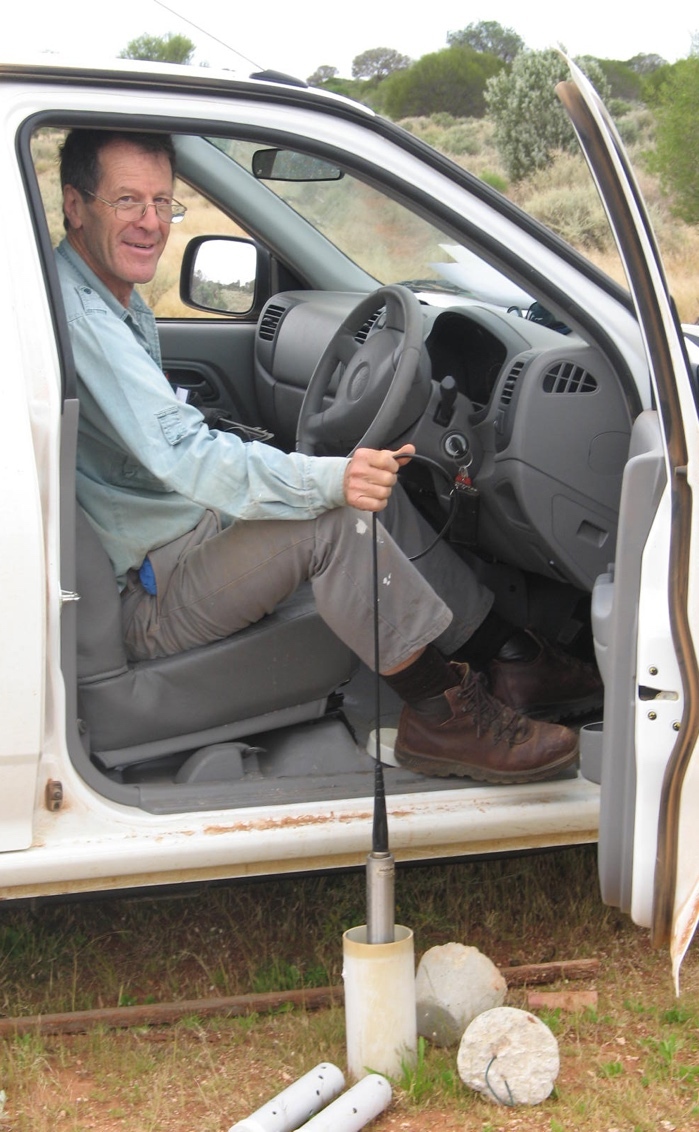
The discovery of a previously unknown fauna - hidden from view and persisting for millions of years - proved difficult for government agencies and mining companies to reckon with. The existing legislation, the Western Australian Wildlife Conservation Act 1950 was sufficiently broad to afford protection to all fauna, which probably came as a surprise to some sectors - saving orchids, dolphins, possums and parrots was fine, but having to deal with tiny blind invertebrates was quite another story. Bill, with typical understated but scientifically rigorous approach, ensured that these animals were not forgotten and helped developed policy documents with other sectors of the Western Australian government, to ensure that sampling of subterranean fauna in Western Australia was a necessary step in the environmental approval process for developments in Western Australia’s burgeoning and lucrative mining industry. Such was Bill’s influence that mining executives and company boards were suddenly very knowledgeable about subterranean fauna and the risks they faced if short-range endemic species were found within a mining development.
Bill was an early adopter of new methods. His early use of computers enabled him to analyse datasets that would otherwise take weeks on a hand-held computer. He also collaborated with colleagues to gain insights into the evolutionary history of subterranean fauna. His initial forays used allozymes obtained by electrophoresis to study biogeographic and speciation patterns in subterranean schizomids and millipedes in Cape Range caves which he overlaid on the geology of the karst systems. He detected regions where gene flow was reduced or absent, thus providing general models for speciation in the region. This work was followed by molecular sequencing that targeted individual genes, first of just a few genes followed by many markers. Bill knew that these methods could help unlock the deep history of Australia’s subterranean fauna and compare them with similar fauna in other parts of the world. Like so many components of the Australian biota, Western Australia’s subterranean fauna was frequently found to be related to Gondwanan organisms which evolved from common ancestors in the Cretaceous. Bill found some stygofauna to be associated with the Tethys Sea, a prehistoric ocean that persisted during the Mesozoic and Cenozoic eras that linked northern Australia to Laurasia, including what is now the Mediterranean Sea.
His collecting prowess during his many field trips led to the discovery of hundreds of previously undescribed species and genera. He proactively collaborated with colleagues around the world to publish scientific descriptions and to provide them with scientific names, leading to hundreds of descriptions.
Bill’s scientific discoveries were recognised by his peers who named numerous species and genera in his honour. He was particularly enamoured with Billibathynella humphreysi, a small subterranean crustacean endemic to Western Australia, that includes his names in both the genus and species epithets. There are also slaters, cockroaches, booklice, wasps, spiders and pseudoscorpions dedicated to him.
Bill’s scientific excellence was also recognised by his peers in several awards. The first was the prestigious Eureka Prize for Excellence in Taxonomy in 2008, followed by the Ivor Beatty Prize from the journal Pacific Conservation Biology in 2020. More recently he was bestowed Honorary Membership of the International Society of Subterranean Biologists (ISBB) in 2024.
Bill was also involved in many societies, but most prominently with the ISSB where he served as Vice President between 2004–2008 and 2012–2014. He served on numerous state and national committees, including Ministerial Advisory Committee for Threatened Ecological Communities, Western Australia (2000–2005), the Ningaloo Coast World Heritage Advisory Committee (2012–2026), and Australian Government’s Threatened Species Scientific Committee (2006–2014).
Bill was one the most productive scientists of his generation, with more than 480 articles in peer-reviewed journals and book chapters. He also edited books and special journal volumes dedicated to subterranean ecosystems, making him a world authority on the subject.
Bill died at the age of 81 after a short illness battling mesothelioma. He was scientifically and socially active until the onset of the disease, also spending precious time with his family and friends, and travelling to exotic locations. As he had done for the past 60 years, he was planning more field work to garner more knowledge about Australia’s biological heritage and preparing the results for publication in scientific journals.
He is survived by his loving wife Rae and their daughters, Miranda and Phoebe, their grandchildren Jasper and Margot, and his daughter Zoe and grandson Raffi.
Adieu Bill. We will always miss your mischievous smile, kind eyes, intellectual generosity and insights as well as your delightful company. Safe travels and we hope the red wine is to your liking.
Mark Harvey
Western Australian Museum
Ric How
Western Australian Museum